
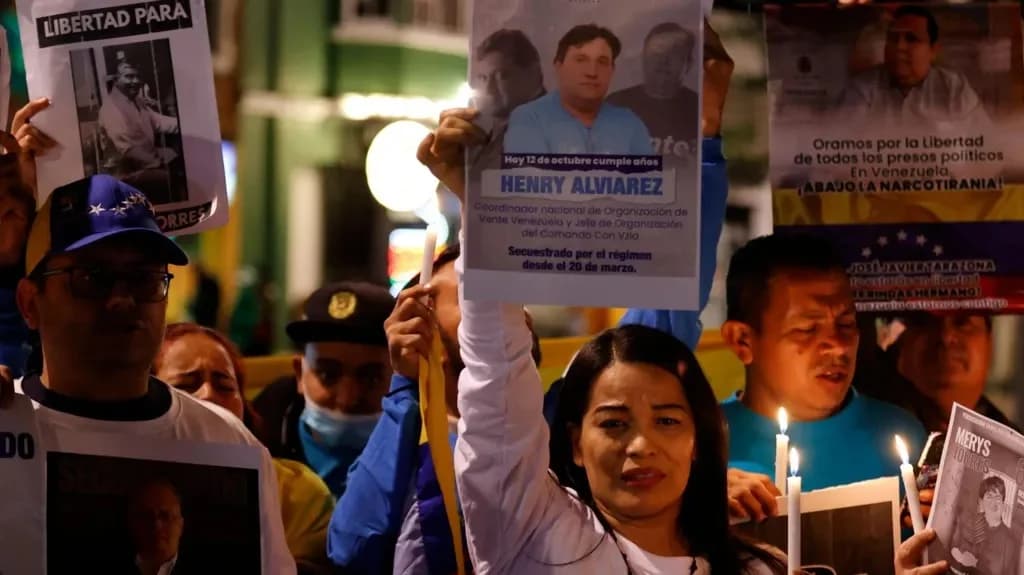
The Venezuelan government has begun releasing detainees considered political prisoners by human rights organisations, a move officials describe as a gesture of goodwill aimed at easing political tensions and promoting national unity. The development comes at a critical moment for the South American nation, only days after the United States carried out a dramatic operation to seize President Nicolás Maduro in Caracas, transferring him to New York to face drug trafficking charges. The announcement was made on state television by Jorge Rodríguez, the head of Venezuela’s National Assembly and bro
The Venezuelan government has begun releasing detainees considered political prisoners by human rights organisations, a move officials describe as a gesture of goodwill aimed at easing political tensions and promoting national unity. The development comes at a critical moment for the South American nation, only days after the United States carried out a dramatic operation to seize President Nicolás Maduro in Caracas, transferring him to New York to face drug trafficking charges. The announcement was made on state television by Jorge Rodríguez, the head of Venezuela’s National Assembly and brother of interim president Delcy Rodríguez. He said that “a significant number” of detainees would be released immediately, though he did not provide exact figures or identify all those being freed. Human rights groups estimate that hundreds of political prisoners remain in Venezuelan jails, with only a limited number confirmed released so far. Spain’s foreign ministry confirmed that five of its nationals, including one dual citizen, were among those released. One of the first and most prominent cases to be verified is that of Rocío San Miguel, a well-known human rights activist and expert on security, defence and the Venezuelan military. San Miguel was arrested in February 2024 at Maiquetía airport near Caracas. At the time, authorities accused her of involvement in a plot to assassinate then-president Maduro, charging her with treason, conspiracy and terrorism—allegations strongly rejected by her supporters and international rights organisations. The release of political prisoners has long been a key demand of the United States and international observers, particularly during periods of heightened repression around elections and mass protests. Since the widely disputed 2024 election, Venezuela’s opposition has claimed that legal action against activists, journalists and political opponents intensified, accusing the government of using detentions as a tool to silence dissent. Venezuelan officials, including Attorney General Tarek Saab, have consistently denied holding political prisoners, insisting that detainees were arrested for legitimate criminal offences. Human rights organizations within Venezuela have welcomed the releases cautiously. While acknowledging the significance of the move, many groups point out that the majority of detainees remain behind bars and stress that releases must continue to be meaningful and transparent. The announcement also coincides with plans to close El Helicoide, one of Venezuela’s most notorious detention centres. The prison has long drawn international condemnation, with human rights reports detailing allegations of torture, including beatings and electrocution. US President Donald Trump said he had ordered the closure of the facility following Maduro’s capture. However, rights group Provea warned that shutting El Helicoide should not distract from the existence of other detention centres across the country where abuses are alleged to continue. Opposition leader and Nobel Peace Prize winner María Corina Machado, who has several close allies still imprisoned, has repeatedly called for the unconditional release of all political detainees. In a recent interview with Fox News, President Trump said Machado was expected to visit the United States soon, adding further international attention to Venezuela’s uncertain political future. Despite the releases, the broader governance of Venezuela remains in doubt. Analysts say the interim administration, despite its close ties to Maduro’s former inner circle, appears willing to cooperate with the United States as it seeks to reshape the country’s political and economic landscape. For many Venezuelans and observers, the latest prisoner releases are seen as a potentially important step—but one that will be judged by what follows next. Source: BBC News



Comments
No comments yet. Be the first to share a thought.