
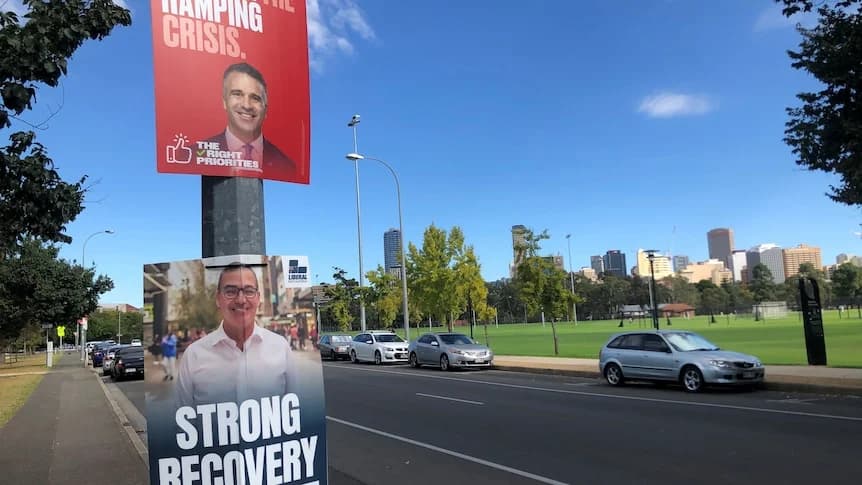
South Australia’s ban on political posters known as corflutes on public roads may have made some suburbs look cleaner, but the move has also left some voters unaware that elections were even happening. In a new tender document released by the Electoral Commission of South Australia (ECSA) ahead of the 2026 state election, the commission flagged the corflute ban as a key challenge. It was one of seven issues listed, alongside concerns like “fake news” and declining trust in democracy. “The ban does pose some challenges for ECSA, as the corflutes had previously helped raise awareness of the el
South Australia’s ban on political posters known as corflutes on public roads may have made some suburbs look cleaner, but the move has also left some voters unaware that elections were even happening. In a new tender document released by the Electoral Commission of South Australia (ECSA) ahead of the 2026 state election, the commission flagged the corflute ban as a key challenge. It was one of seven issues listed, alongside concerns like “fake news” and declining trust in democracy. “The ban does pose some challenges for ECSA, as the corflutes had previously helped raise awareness of the elections and their candidates,” the ECSA document said, as reported by ABC News. The Malinauskas Government passed laws in February 2024 banning election posters on public roads, trees, and Stobie poles, just weeks before the March Dunstan by-election. The ban, which still allows signs on private property, had support from both major parties. Special Minister of State Kyam Maher defended the move said, “People are glad to see the visual pollution gone from our streets, and the impact on our environment reduced.” However, the ECSA’s post-election survey tells a different story. Conducted by research firm Verian, the survey found that 27 per cent of voters said the lack of posters made them less aware that an election was taking place. Among people who did not vote, 37 per cent said the absence of posters reduced their awareness of the event. “It’s clear that ECSA may need to explore new strategies to enhance awareness for future elections,” the document stated. Marketing expert Dr Andrew Hughes from the Australian National University said that corflutes still play a crucial role in election campaigns, especially during by-elections, which often have lower turnout than major elections. “What corflutes are really designed to do is raise awareness very quickly about candidates, parties and the election itself, and I think they make that purpose happen,” Dr Hughes said. He added, “In a smaller by-election, the fact that so many aren’t engaged to the point that they need to have a corflute remind them is troubling." Voter turnout has been slowly declining in South Australia. At the 2022 state election, turnout for the upper house was 89.2 per cent, down from over 94 per cent in 2002. Young voters are even less likely to vote, with only 76.2 per cent of 18 to 24-year-olds turning out in 2018. Turnout at the 2024 Dunstan by-election was 80.8 per cent, with 21,893 of 27,108 enrolled voters casting ballots. Labor’s Cressida O’Hanlon narrowly won the seat by just 360 votes. In contrast, the ban did not appear to affect voter participation in the recent federal election. According to the Australian Electoral Commission, turnout in South Australia actually increased slightly from 91.07 per cent in 2022 to 91.45 per cent in 2025. AEC spokesperson Alex Morris said the poster ban "has not been a concern" at the federal level, and decisions around corflutes are "a matter for state governments and local councils to regulate." With the next state election scheduled for March 21, 2026, ECSA says it is working on new ways to communicate with voters. “The planning will take into consideration the legislative change to prohibit corflutes on public roads,” the commission told ABC News, adding that a final communication strategy will be ready by September 2025. Minister Maher said the government is already working with ECSA to “ensure their communications activities are as effective as possible” and help all South Australians participate in the upcoming election.



Comments
No comments yet. Be the first to share a thought.