
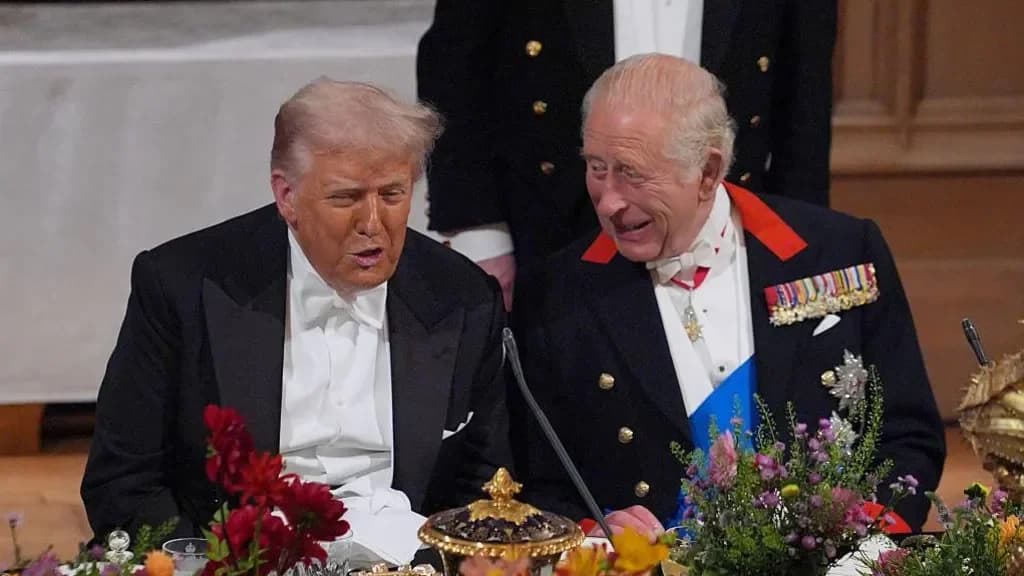
President Trump's Second State Visit to the UK President Donald Trump and First Lady Melania Trump embarked on an unprecedented second state visit to the United Kingdom from September 16 to 18, hosted by King Charles III at Windsor Castle. This marks the first time a U.S. president has been invited for two state visits during their presidency. The visit included a joint press conference with Prime Minister Keir Starmer at Chequers, discussions on trade and immigration, and a state banquet attended by the royal family. Chatham House. The state visit led to significant economic commitments, in
President Trump's Second State Visit to the UK President Donald Trump and First Lady Melania Trump embarked on an unprecedented second state visit to the United Kingdom from September 16 to 18, hosted by King Charles III at Windsor Castle. This marks the first time a U.S. president has been invited for two state visits during their presidency. The visit included a joint press conference with Prime Minister Keir Starmer at Chequers, discussions on trade and immigration, and a state banquet attended by the royal family. Chatham House. The state visit led to significant economic commitments, including £150 billion in U.S. corporate investments in the UK's technology, finance, and energy sectors. Notable contributions include £100 billion from Blackstone and £22 billion from Microsoft, underscoring the strengthened UK-U.S. economic ties. During the visit, President Trump suggested that the UK should consider using the military to manage migration and border control. UK Business Secretary Peter Kyle dismissed the idea, emphasizing that the UK Border Force is already well-equipped and supported by naval cooperation when necessary. Queen Camilla and Princess Kate Middleton welcomed President Trump at Windsor Castle, wearing brooches rich in royal symbolism. Princess Kate accessorized her outfit with the Prince of Wales Feathers brooch, while Queen Camilla chose the Prince Albert brooch, complementing her blue ensemble and carrying sentimental value. Canada Canada's federal election campaign is in full swing, with Prime Minister Justin Trudeau seeking re-election amid growing concerns over housing affordability, healthcare, and climate change. The opposition parties, including the Conservative Party and the New Democratic Party (NDP), are gaining momentum, promising significant policy changes. The election is scheduled for October 20, 2025. Canada's economy continues to show resilience, with GDP growth projected at 2.3% for 2025. However, challenges such as global supply chain disruptions and fluctuating oil prices pose risks to sustained growth. The Bank of Canada is closely monitoring inflation rates and may adjust interest rates accordingly. Indigenous communities across Canada are intensifying efforts to reclaim traditional lands and assert rights over natural resources. Recent legal victories have set precedents for land restitution, prompting discussions on reconciliation and the implementation of the United Nations Declaration on the Rights of Indigenous Peoples (UNDRIP). Brazil Brazil is experiencing political instability as President Luiz Inácio Lula da Silva faces mounting pressure over economic challenges and corruption allegations. Protests have erupted in major cities, demanding accountability and reforms. The government is struggling to maintain public trust while addressing economic disparities. Deforestation rates in the Amazon rainforest have surged, raising alarms among environmentalists and indigenous groups. The government has pledged to strengthen enforcement of environmental laws and collaborate with international organizations to combat illegal logging and land grabbing. Brazil is seeking to enhance trade relations with neighboring South American countries through the Mercosur trade bloc. Efforts are underway to reduce trade barriers and promote regional economic integration, aiming to bolster economic growth and stability in the region. Argentina Argentina's presidential election campaign is heating up, with candidates from various political parties outlining their visions for the country's future. Key issues include inflation control, debt management, and social welfare programs. The election is scheduled for November 2025, with early voting expected to begin in October. The Argentine government is negotiating with the International Monetary Fund (IMF) for a new financial assistance package. Proposed economic reforms aim to stabilize the economy, reduce inflation, and attract foreign investment. Public opinion remains divided on the necessity and impact of these reforms. Social movements advocating for labor rights, gender equality, and environmental protection are gaining traction across Argentina. Public protests have become more frequent, reflecting widespread dissatisfaction with government policies and economic conditions. Chile Chile's constitutional reform process is progressing, with a new draft constitution expected to be presented to the public in early 2026. The reform aims to address social inequalities and establish stronger protections for human rights, education, and healthcare. Chile's mining industry, a significant contributor to the national economy, faces increasing scrutiny over environmental impacts. Protests by environmental groups and indigenous communities have led to calls for stricter regulations and more sustainable practices in the mining sector. Chile is actively pursuing trade agreements with Asia-Pacific nations to diversify its export markets. Negotiations are underway with countries such as Japan, South Korea, and Australia, aiming to enhance economic ties and reduce dependency on traditional trading partners.



Comments
No comments yet. Be the first to share a thought.