
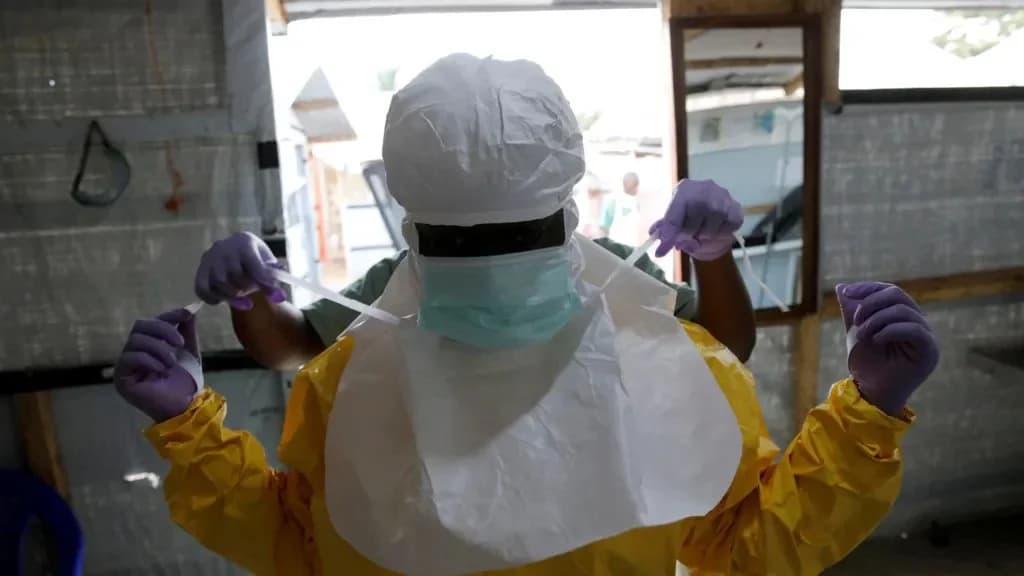
The World Health Organization (WHO) has officially declared the ongoing Ebola outbreak in the Democratic Republic of Congo (DR Congo) a Public Health Emergency of International Concern following growing fears of regional spread. The outbreak, centered in the eastern Ituri province, has already recorded around 246 suspected cases and 80 deaths, according to health authorities. The WHO warned that the actual number of infections could be much higher due to challenges in detecting and reporting cases in affected areas. Health officials confirmed that the outbreak involves the Bundibugyo strain
The World Health Organization (WHO) has officially declared the ongoing Ebola outbreak in the Democratic Republic of Congo (DR Congo) a Public Health Emergency of International Concern following growing fears of regional spread. The outbreak, centered in the eastern Ituri province, has already recorded around 246 suspected cases and 80 deaths, according to health authorities. The WHO warned that the actual number of infections could be much higher due to challenges in detecting and reporting cases in affected areas. Health officials confirmed that the outbreak involves the Bundibugyo strain of the Ebola virus, a rare form for which there are currently no approved vaccines or specific treatments. The disease is known for its severe symptoms and high fatality rate, with previous outbreaks of this strain killing nearly 30% of infected patients. Early symptoms of Ebola include fever, headache, muscle pain, fatigue and sore throat before progressing into vomiting, diarrhoea, skin rashes and, in severe cases, internal and external bleeding. The WHO said eight laboratory-confirmed cases have already been identified across three major health zones, including Bunia, the capital of Ituri province, as well as the mining towns of Mongwalu and Rwampara. One confirmed case has also been reported in Kinshasa after a patient travelled from Ituri. Concerns increased further after neighbouring Uganda confirmed two Ebola cases linked to the outbreak. Ugandan authorities said a 59-year-old Congolese citizen who died on Thursday tested positive for the virus before his body was returned to DR Congo. Reports also confirmed an Ebola case in the eastern city of Goma, an area currently controlled by M23 rebels, raising fears about access to healthcare and effective containment measures. WHO Director-General Dr Tedros Adhanom Ghebreyesus warned that the security crisis, humanitarian challenges and high population movement in eastern DR Congo are creating conditions for wider transmission. “The outbreak could become much larger than what is currently being detected,” the WHO cautioned, emphasizing the need for stronger surveillance and regional cooperation. The health agency urged DR Congo and Uganda to establish emergency operation centres to strengthen monitoring, contact tracing and infection prevention. Countries bordering DR Congo were also advised to increase health surveillance due to frequent trade and travel movements across borders. Despite the growing concern, the WHO advised countries not to close borders or impose travel restrictions, saying such measures are often driven by fear rather than science. Ebola was first discovered in 1976 in what is now DR Congo and is believed to originate from infected animals such as fruit bats. This marks the country’s 17th Ebola outbreak. DR Congo previously experienced its deadliest Ebola outbreak between 2018 and 2020, during which nearly 2,300 people lost their lives. Over the last five decades, more than 15,000 deaths linked to Ebola have been recorded across Africa.



Comments
No comments yet. Be the first to share a thought.