
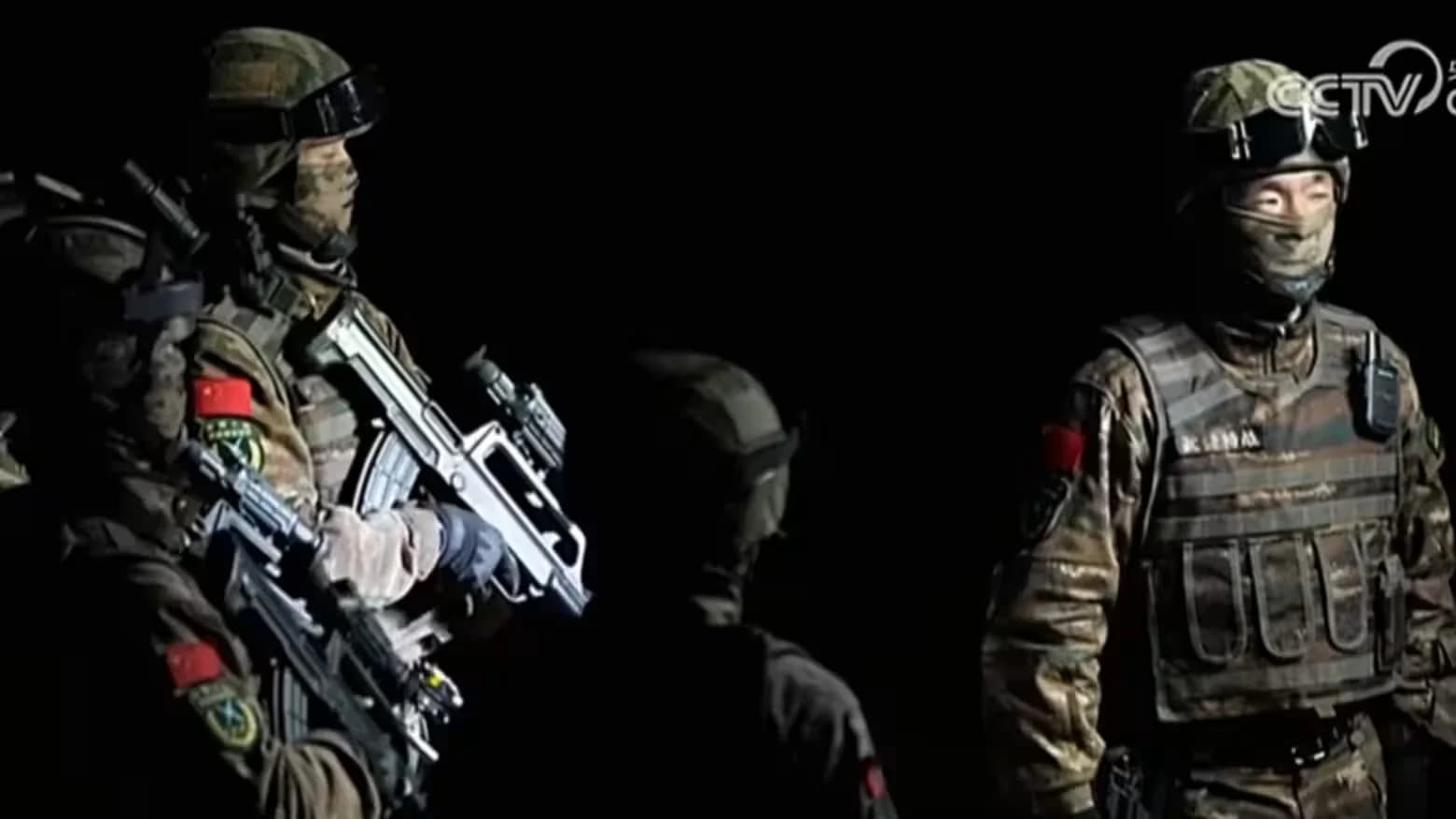
Chinese special forces have carried out a high-profile military drill simulating a so-called “decapitation” strike, raising fresh concerns about Beijing’s intentions toward Taiwan and the tactics it could deploy in a future conflict. Footage aired recently on China Central Television (CCTV), the state broadcaster, showed People’s Liberation Army (PLA) personnel conducting a nighttime raid exercise that analysts say closely resembles operations designed to neutralize an opposing country’s political or military leadership. The drill involved rapid infiltration, coordinated assaults and precisio
Chinese special forces have carried out a high-profile military drill simulating a so-called “decapitation” strike, raising fresh concerns about Beijing’s intentions toward Taiwan and the tactics it could deploy in a future conflict. Footage aired recently on China Central Television (CCTV), the state broadcaster, showed People’s Liberation Army (PLA) personnel conducting a nighttime raid exercise that analysts say closely resembles operations designed to neutralize an opposing country’s political or military leadership. The drill involved rapid infiltration, coordinated assaults and precision targeting, elements commonly associated with leadership-removal missions. Military experts note that the exercise bears similarities to tactics used in recent US special operations abroad, including a raid in Venezuela, and suggest it reflects evolving Chinese thinking about modern warfare. Rather than relying solely on prolonged conventional battles, Beijing appears increasingly focused on fast, decisive operations aimed at paralyzing an adversary’s command structure at the outset of a conflict. The implications for Taiwan are significant. For years, China has insisted that the island is part of its territory and has refused to rule out the use of force to bring it under Beijing’s control. A “decapitation” strategy targeting Taiwan’s leadership could be intended to sow chaos, weaken resistance and accelerate political collapse before international actors have time to respond. The drill comes amid heightened tensions across the Taiwan Strait. China has stepped up military exercises around the island, including large-scale naval and air force maneuvers designed to simulate encirclement. At the same time, Beijing has imposed sanctions on US defense firms involved in arms sales to Taiwan and warned against what it calls “foreign interference.” While Chinese authorities did not explicitly link the exercise to Taiwan, the choice to broadcast the footage publicly is widely seen as deliberate signaling. It sends a message not only to Taipei but also to Washington and regional allies about China’s growing special forces capabilities and its willingness to study and adapt tactics used by other major powers. Taiwanese officials have repeatedly warned that China’s military pressure is part of a broader campaign combining psychological, political and military tools. Analysts say drills like this one fit into that pattern, reinforcing uncertainty and testing reactions without crossing the threshold into open conflict. As tensions continue to rise, observers caution that such exercises, while framed as training, increase the risk of miscalculation. With multiple powers operating in close proximity around Taiwan, even symbolic actions can carry strategic weight — and further strain an already fragile regional balance.



Comments
No comments yet. Be the first to share a thought.