
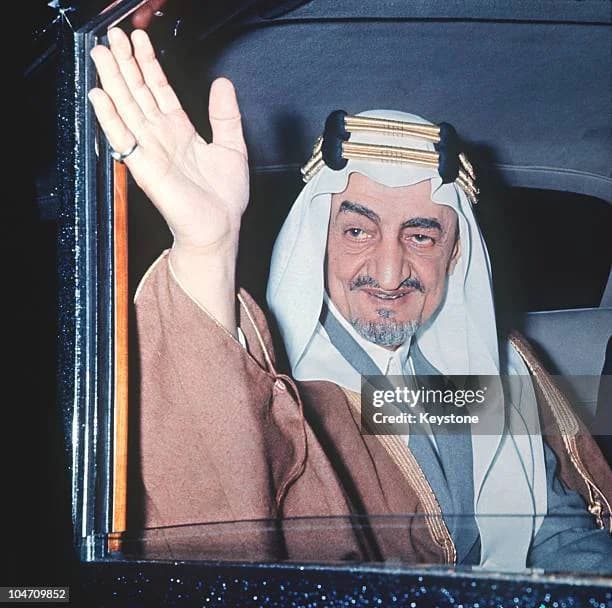
Across different countries, hospitals, universities, mosques and even sports teams continue to carry the name of King Faisal, reflecting the lasting influence of one of Saudi Arabia’s most respected leaders. A closer look at his life helps explain why his legacy remains visible across continents. King Faisal bin Abdulaziz Al Saud, born on April 14, 1906, was the son of King Abdulaziz, founder of modern Saudi Arabia, and Tarfa bint Abdullah Al Sheikh. His mother died when he was six months old, and he was raised by his grandparents, who guided his early education. By the age of nine, he had m
Across different countries, hospitals, universities, mosques and even sports teams continue to carry the name of King Faisal, reflecting the lasting influence of one of Saudi Arabia’s most respected leaders. A closer look at his life helps explain why his legacy remains visible across continents. King Faisal bin Abdulaziz Al Saud, born on April 14, 1906, was the son of King Abdulaziz, founder of modern Saudi Arabia, and Tarfa bint Abdullah Al Sheikh. His mother died when he was six months old, and he was raised by his grandparents, who guided his early education. By the age of nine, he had memorized the Holy Qur’an and mastered key religious teachings. His father exposed him to political affairs early, shaping his leadership qualities. Faisal began representing his father in major meetings when he was still a child. In 1919, he travelled to London to attend an international conference on behalf of Saudi leadership, after his older brother who was meant to attend died of influenza. His political responsibilities continued to grow over the years, leading to his appointment as Prime Minister on August 16, 1954. He ascended to the throne on November 2, 1964, becoming King Faisal of Saudi Arabia. His reign is remembered for modernization efforts, diplomatic leadership and his strong stance on issues affecting the Muslim world. King Faisal’s life came to an abrupt end on March 25, 1975, when he was assassinated during a public event meant to address national issues. He was shot by Prince Faisal bin Musaid, the son of his paternal half-brother. Despite being rushed to a nearby hospital, the king died shortly afterward from cardiac arrest. Saudi Arabia entered a three-day national mourning period, and he was buried on March 26 in the Al-Qud Cemetery in Riyadh, in a ceremony attended by thousands. To honor his legacy, his sons established the King Faisal Foundation in 1976. The foundation has become one of the most influential philanthropic organizations in the region, supporting health, education, research and humanitarian projects. Since 1979, it has awarded the King Faisal International Prize, one of the world’s most respected awards in fields such as science, medicine, Islamic studies and service to humanity. Each laureate receives a gold medal and USD 200,000.
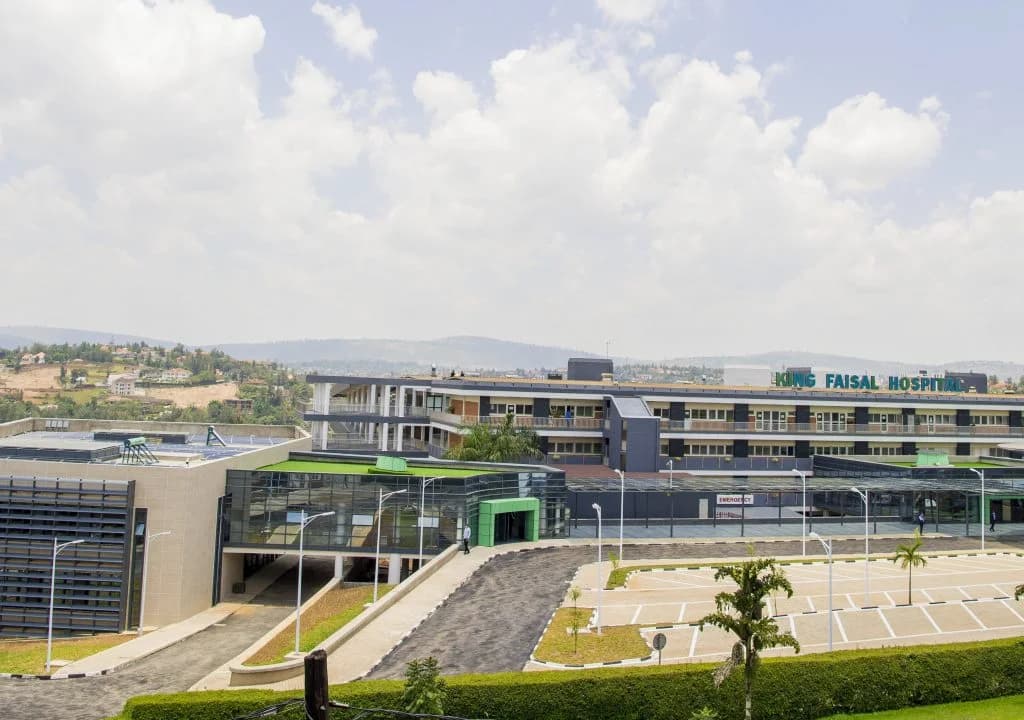
King Faisal Hospital in Kigali, Rwanda. Today, it stands as one of Rwanda’s top referral hospitals
The foundation also created the King Faisal Center for Research and Islamic Studies (KFCRIS) in 1983 to promote education, research and technological advancement. It later founded Alfaisal University in Riyadh and Effat University, which focuses on women’s education. Between 1987 and 1991, the foundation funded the construction of King Faisal Hospital in Kigali, Rwanda. Today, it stands as one of Rwanda’s top referral hospitals. Other facilities named after him include King Faisal Hospital in Mecca. Other global institutions named in his honor include a football club in Ghana, King Faisal Babes F.C., the King Faisal Mosque in Pakistan, and another mosque in Sharjah in the United Arab Emirates.These global institutions reflect how his influence extends far beyond Saudi Arabia.
Sources: Encyclopedia Britannica, Wikipedia, King Faisal Foundation, History & House of Saud.



Comments
No comments yet. Be the first to share a thought.