
Massive wildfires sweeping across parts of France and Spain have forced more than 330,000 people to evacuate their homes, as authorities warn that soaring temperatures and strong winds could worsen the crisis in the coming days. In southwestern France, firefighters continue battling a major blaze in the Gironde region, where the fire has advanced to within 15 kilometers (9 miles) of the outskirts of Bordeaux , a city of around 850,000 residents. Although officials reported that the fire remained broadly stable overnight due to lighter winds and a brief spell of rain, meteorologists are foreca
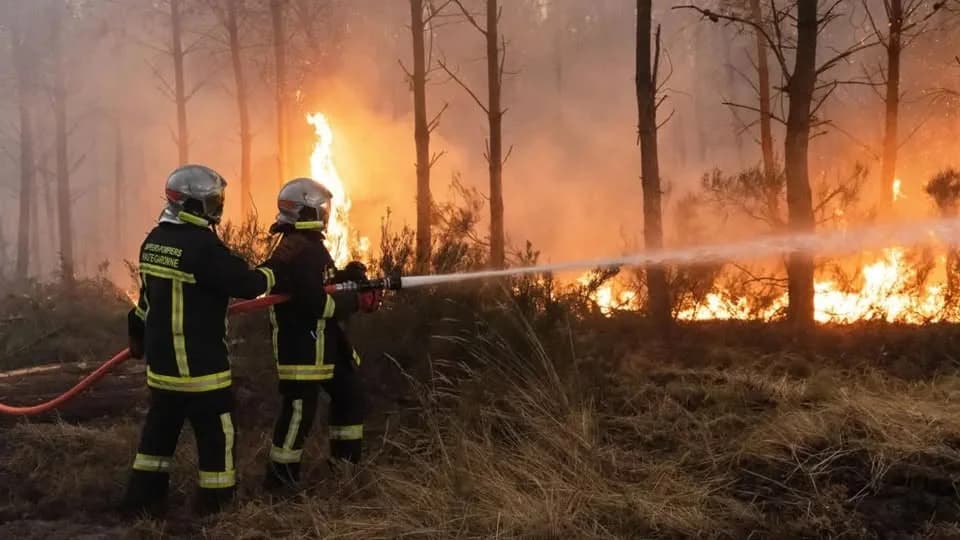
Massive wildfires sweeping across parts of France and Spain have forced more than 330,000 people to evacuate their homes, as authorities warn that soaring temperatures and strong winds could worsen the crisis in the coming days. In southwestern France, firefighters continue battling a major blaze in the Gironde region, where the fire has advanced to within 15 kilometers (9 miles) of the outskirts of Bordeaux, a city of around 850,000 residents. Although officials reported that the fire remained broadly stable overnight due to lighter winds and a brief spell of rain, meteorologists are forecasting temperatures of up to 40°C (104°F) on Tuesday, raising fears that the flames could spread rapidly once again. French firefighters have described the operation as a "David versus Goliath" battle against one of the country's most destructive wildfires in recent years. The blaze has already burned an area larger than the Isle of Wight and generated a rare pyrocumulonimbus cloud a massive fire-induced thunderstorm capable of producing its own winds and lightning, making the fire even more unpredictable. President Emmanuel Macron is expected to chair an emergency crisis meeting with senior ministers to assess the situation and coordinate the country's response as thousands of emergency personnel remain deployed across the affected areas. The Gironde prefecture has evacuated approximately 220,000 residents, while authorities have suspended children's summer camps, Scout camps, and holiday programs for people with disabilities. Officials have also urged tourists to avoid traveling to the region until conditions improve. "The situation remains extremely difficult," authorities said, emphasizing that changing wind patterns continue to pose a significant challenge for firefighters despite overnight improvements. Meanwhile, neighboring Spain is facing its own wildfire emergency. More than 105,000 people have been evacuated from affected regions, including around 15,000 residents in the eastern coastal city of Valencia. Additional evacuations have taken place around Madrid, Ávila, and Toledo, where fires have scorched an estimated 77,000 hectares of land. Spanish Prime Minister Pedro Sánchez is scheduled to visit the fire-ravaged areas in Valencia, warning that the country faces "difficult hours ahead" as hot, dry weather is expected to intensify the fires. Across both countries, thousands of displaced residents are spending nights in temporary shelters established in sports halls, exhibition centers, and community facilities, where volunteers and emergency services are providing food, water, medical assistance, and essential supplies. While some residents in parts of the Madrid region have begun returning home after local conditions improved, authorities caution that the overall wildfire threat remains high. Fire crews continue working around the clock to contain multiple active blazes before another expected heatwave fuels further destruction. The fires are among the largest to hit southern Europe this year and have once again highlighted the growing impact of extreme weather, with prolonged heatwaves, drought, and changing climate conditions contributing to increasingly severe wildfire seasons across the continent.



Comments
No comments yet. Be the first to share a thought.