

The Earth’s climate is more out of balance than at any point in observed history, the World Meteorological Organization (WMO) warned on World Meteorological Day March 23, 2026, citing record warming of the atmosphere and oceans, rapid ice melt, and soaring greenhouse gas levels. The WMO’s State of the Global Climate report 2025 confirms that 2015–2025 are the hottest eleven years on record. The report says 2025 ranked as the second or third warmest year globally, about 1.43 °C above the 1850–1900 pre-industrial average. “The State of the Global Climate is in a state of emergency. Planet Earth
The Earth’s climate is more out of balance than at any point in observed history, the World Meteorological Organization (WMO) warned on World Meteorological Day March 23, 2026, citing record warming of the atmosphere and oceans, rapid ice melt, and soaring greenhouse gas levels.
The WMO’s State of the Global Climate report 2025 confirms that 2015–2025 are the hottest eleven years on record. The report says 2025 ranked as the second or third warmest year globally, about 1.43 °C above the 1850–1900 pre-industrial average.
“The State of the Global Climate is in a state of emergency. Planet Earth is being pushed beyond its limits. Every key climate indicator is flashing red,” said UN Secretary-General António Guterres. “Humanity has just endured the eleven hottest years on record. When history repeats itself eleven times, it is no longer a coincidence.”
He added in a separate statement: “It is a call to act.”
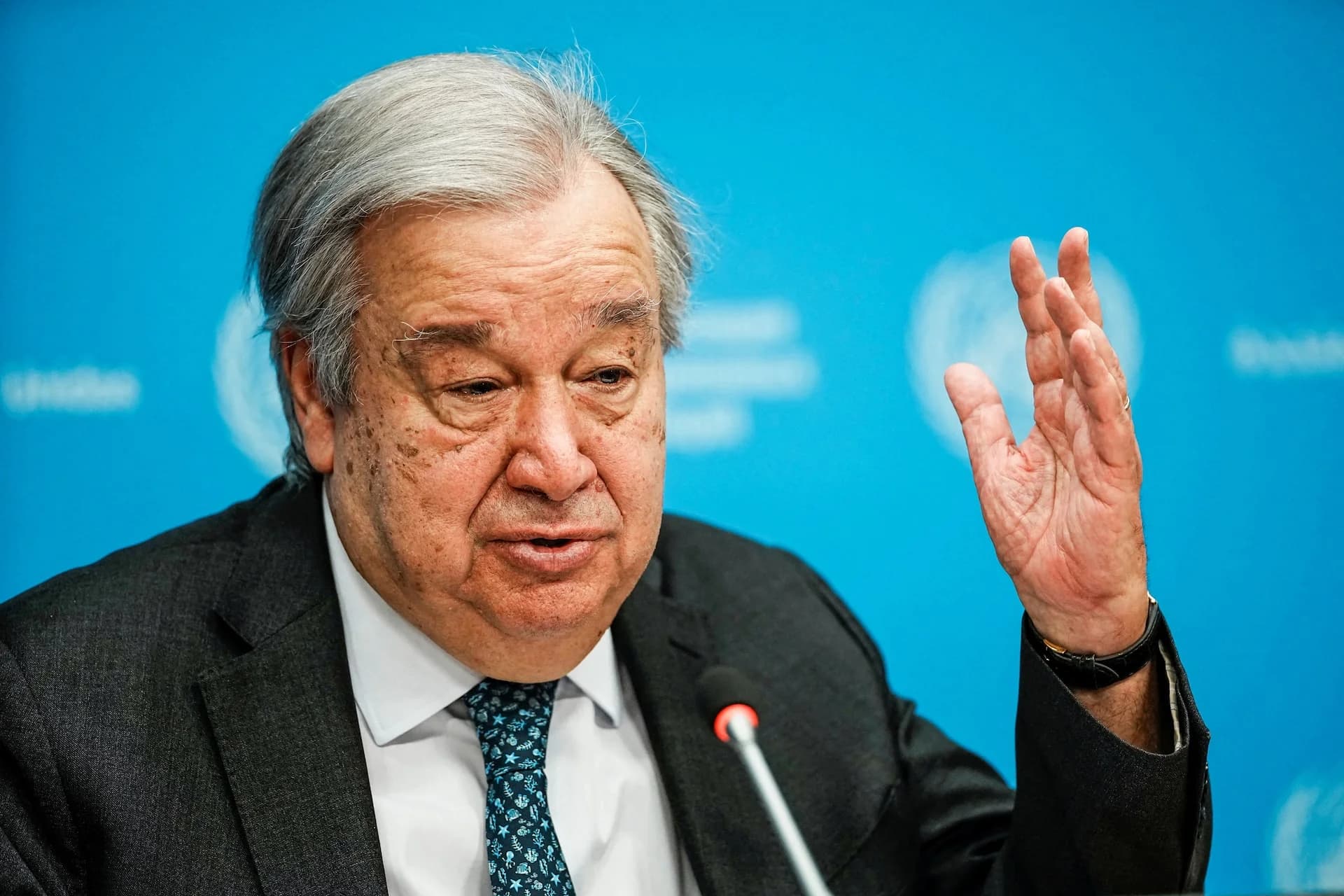
United Nations Secretary-General Antonio Guterres speaks during a press conference in New York January 2026. /Reuters
Oceans Absorbing Vast Heat and Carbon
The oceans have absorbed more than 91% of excess heat from greenhouse gas-driven warming and about 18 times the annual energy use of humanity each year over the past two decades. Ocean warming has set new records every year for the past nine years and contributes to stronger storms, marine heatwaves, and accelerating sea-ice loss.
Annual Arctic sea-ice extent in 2025 was the lowest or second-lowest on record, while Antarctic sea ice ranked as the third lowest. Glaciers in Iceland and along the Pacific coast of North America experienced exceptional mass loss. The melting ice and warming oceans are driving long-term sea-level rise, which has accelerated since satellite measurements began in 1993.
Earth’s Energy Imbalance Reaches New Highs
For the first time, the WMO report includes the Earth’s energy imbalance as a key climate indicator. Increasing concentrations of carbon dioxide, methane, and nitrous oxide, with CO₂ in 2024 at its highest level in the last 2 million years, have trapped more heat in the Earth system than ever measured, pushing the planet beyond its natural equilibrium. The annual increase in CO₂ in 2024 was the largest since modern measurements began in 1957.
“Human activities are increasingly disrupting the natural balance, and we will live with these consequences for hundreds, even thousands, of years,” said WMO Secretary-General Celeste Saulo.
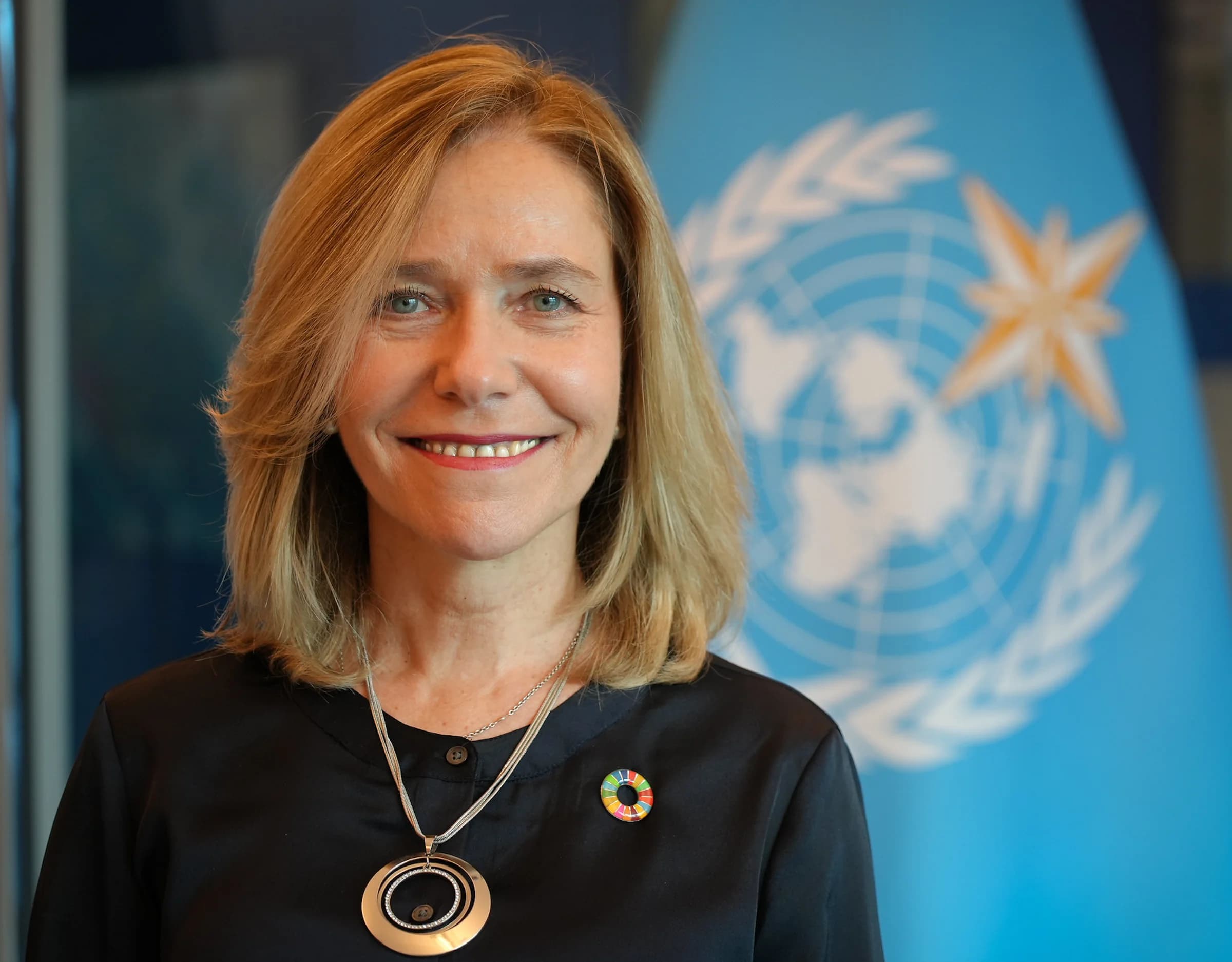
Professor Celeste Saulo, Secretary-General of the World Meteorological Organization (WMO)
Extreme Weather and Human Impacts
Extreme weather in 2025, heatwaves, wildfires, droughts, tropical cyclones, storms, and flooding, caused thousands of deaths, affected millions, and resulted in billions of dollars in economic losses. The report highlights cascading effects, including food insecurity, displacement, and health risks, especially in vulnerable and conflict-affected regions.
Climate change is also exacerbating health risks, including mosquito-borne diseases such as dengue, the fastest-growing mosquito-borne disease, and workplace heat stress, which affects over one-third of the global workforce annually, particularly in agriculture and construction. Early warning systems and integration of climate data into health decision-making remain limited, the WMO said.
Guterres emphasized the link between climate and security: “Our addiction to fossil fuels is destabilizing both the climate and global security. Today’s report should come with a warning label: climate chaos is accelerating, and delay is deadly.”
The WMO report draws on contributions from national meteorological services, regional climate centers, the United Nations, and dozens of scientific experts. It also notes that ocean warming, sea-level rise, and deep-ocean pH changes are projected to continue for centuries, with some changes irreversible on centennial to millennial timescales. These changes underscore that without urgent action, the consequences will be felt for generations.
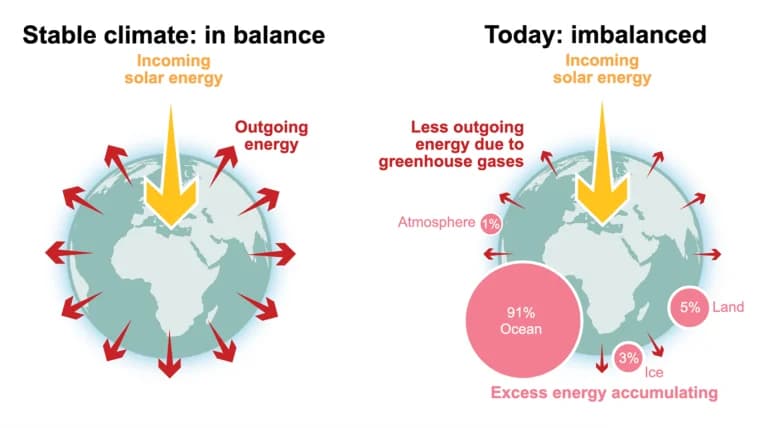
Schematic representation of Earth’s energy balance and imbalance. Source: FAQ 7.1 IPCC, 2021.
Report:
https://wmo.int/news/media-centre/earths-climate-swings-increasingly-out-of-balance



Comments
No comments yet. Be the first to share a thought.