
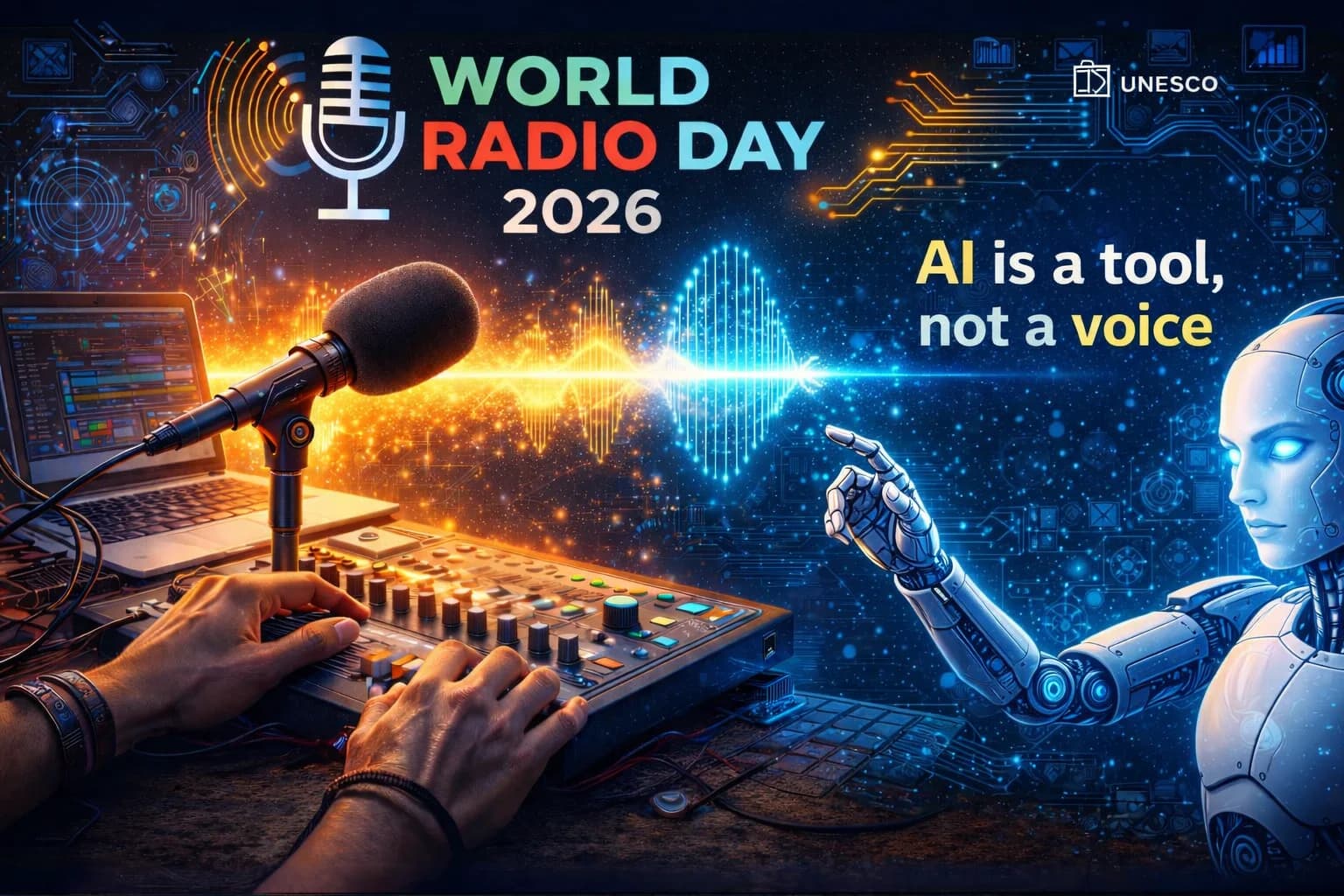
World Radio Day, observed every 13 February, honors the enduring power of radio to inform, educate, and connect people, even as digital technologies evolve. It was proclaimed by UNESCO and adopted by the United Nations in 1946. This year’s official theme, “ Radio and Artificial Intelligence: AI is a tool, not a voice ,” underscores a shared message from broadcasters: while generative AI can support content creation, translation, and accessibility, it must not replace the human voice that has defined radio for generations. The day celebrates radio’s accessibility and its unique ability to reach
World Radio Day, observed every 13 February, honors the enduring power of radio to inform, educate, and connect people, even as digital technologies evolve. It was proclaimed by UNESCO and adopted by the United Nations in 1946.
This year’s official theme, “Radio and Artificial Intelligence: AI is a tool, not a voice,” underscores a shared message from broadcasters: while generative AI can support content creation, translation, and accessibility, it must not replace the human voice that has defined radio for generations. The day celebrates radio’s accessibility and its unique ability to reach diverse audiences in both urban and rural areas.
UNESCO’s World Radio Day 2026 initiative encourages stations to approach AI as an opportunity for growth and innovation, while preserving the warmth, reliability, and human touch that audiences value.
In Rwanda, radio remains a vital part of daily life, with over 30 licensed radio stations serving listeners across the country and Radio Rwanda reaching nearly the entire population with news, culture, sports, educational content, and public information. During the COVID‑19 lockdown, radio became a lifeline for students, broadcasting lessons nationwide so children could continue learning even while schools were closed.

UNICEF/UNI319832/Kanobana Radio learning in the time of Coronavirus
Rwandan media professionals and students, including those from the Institute of Catholic Kabgayi, use World Radio Day to highlight radio’s role in education, civic engagement, and accurate public information. With stations across the country, the day is marked with special programming and community features that showcase radio’s ongoing impact on national dialogue and cultural expression.
Across the world, radio stations and communities mark World Radio Day with special programming, discussions, and audience engagement. In the United States, community stations such as WUWU Community Radio hosted meet‑and‑greet events and live broadcasts to celebrate local engagement and storytelling.
Similarly, broadcasters at Radio Miraya in South Sudan emphasized the importance of accurate information and peacebuilding, with on‑air presenters highlighting how radio continues to support listeners even in conflict-affected areas.
World Radio Day highlights radio’s enduring role as a resilient and trusted medium. Even as technology advances, its human voice continues to inform, connect, and unite communities worldwide.



Comments
No comments yet. Be the first to share a thought.