
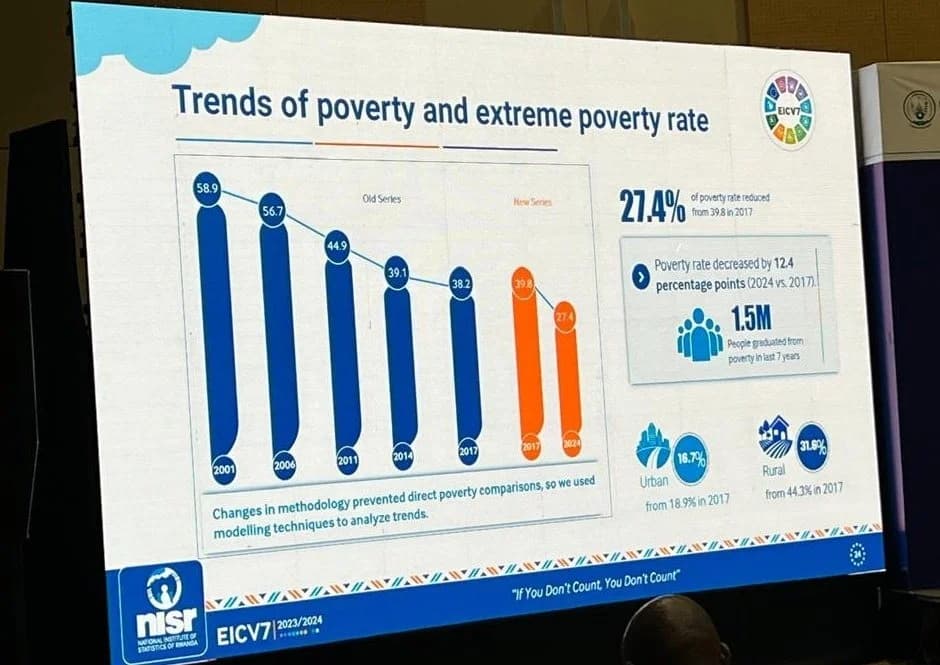
Rwanda's poverty rate has declined from 39.8% in 2017 to 27.4% in 2024, with 1.5 million people lifted out of poverty over the past seven years, according to the latest Integrated Household Living Conditions Survey (EICV7). The EICV survey is usually conducted every three years, but the latest cycle was delayed due to the Covid-19 pandemic. The survey, released by the National Institute of Statistics of Rwanda (NISR) on Wednesday, April 15, 2025, shows a significant decline in poverty—from 39.8% in 2017 to 27.4% in 2024. During the same period, extreme poverty dropped from 11.3% to 5.4%. Th
Rwanda's poverty rate has declined from 39.8% in 2017 to 27.4% in 2024, with 1.5 million people lifted out of poverty over the past seven years, according to the latest Integrated Household Living Conditions Survey (EICV7). The EICV survey is usually conducted every three years, but the latest cycle was delayed due to the Covid-19 pandemic. The survey, released by the National Institute of Statistics of Rwanda (NISR) on Wednesday, April 15, 2025, shows a significant decline in poverty—from 39.8% in 2017 to 27.4% in 2024. During the same period, extreme poverty dropped from 11.3% to 5.4%. The report also indicates that the average annual income per Rwandan is $1,040, which is approximately 1.1 million Rwandan Francs. Between 2017 and 2024, a total of 1,374,214 jobs were created, surpassing the national target of generating 250,000 jobs annually.
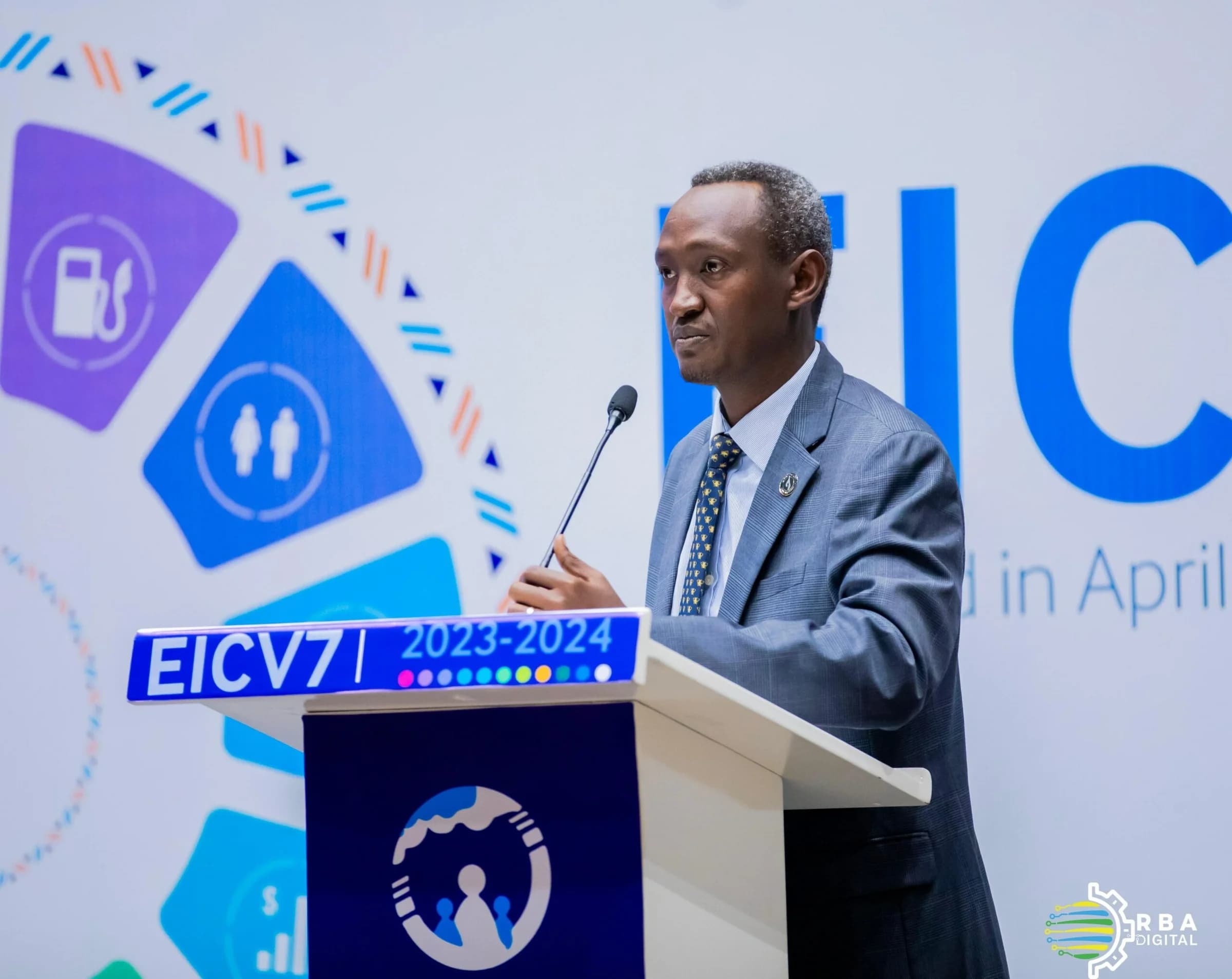
Presenting the findings, Ivan Murenzi, Director General of the National Institute of Statistics of Rwanda, emphasized that the graduation of over 1.5 million Rwandans from poverty was largely attributed to various government programs. “We worked with LODA [Local Administrative Entities Development Agency] to analyze households under the VUP program. Among those in this program, poverty stands at 40.5%. It's likely that initially, 70% of these households were poor, which means the program has had a significant impact in helping many households escape poverty,” he said.
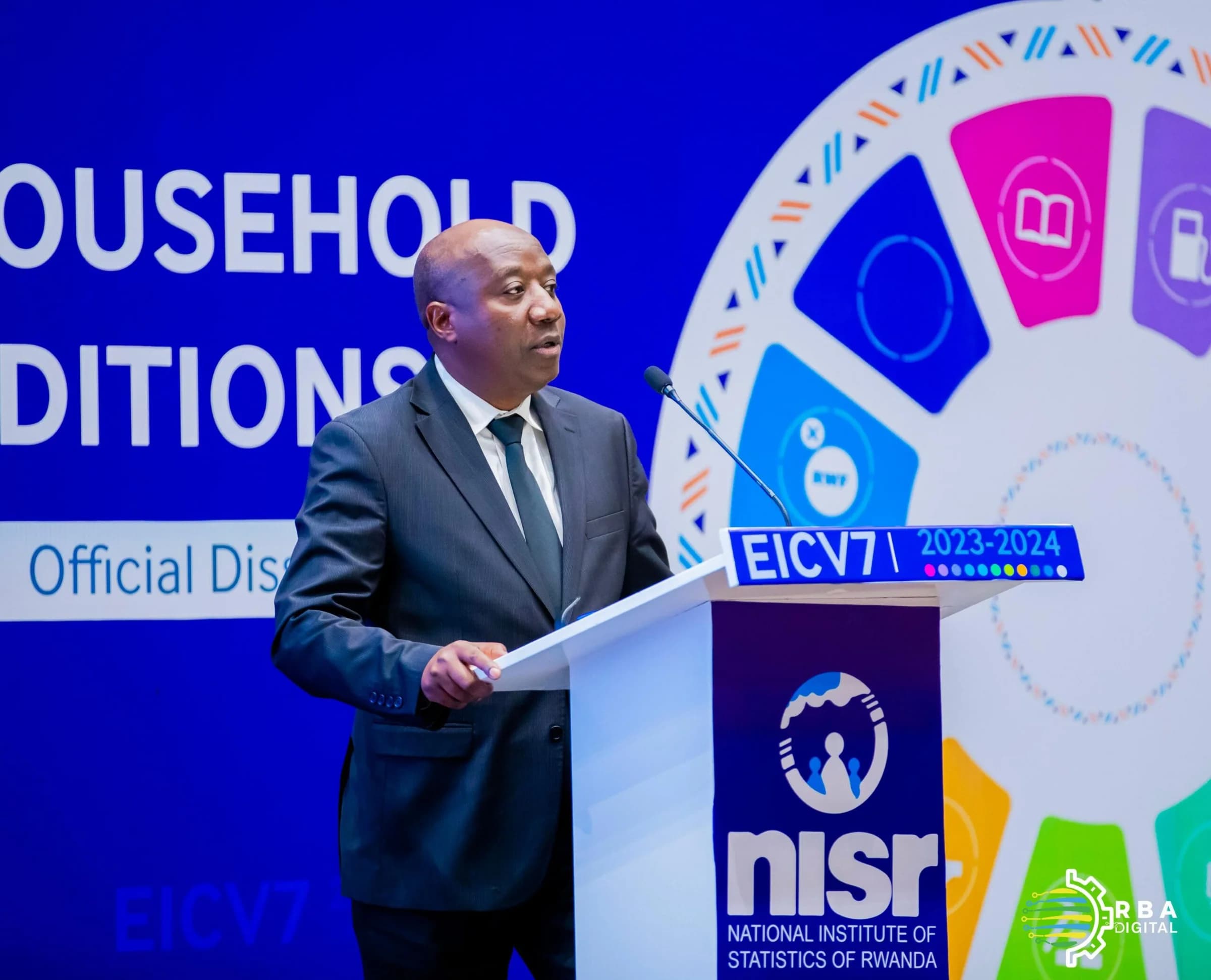
Prime Minister Dr. Edouard Ngirente stated that the findings from the 7th Household Living Conditions Survey represent more than just statistics—they reflect the country's progress and development. “These figures go beyond statistics. They represent real improvements in the lives of our citizens.” The survey also revealed that Nyamagabe District has the highest poverty rate in the country at 51.4%, followed by Gisagara (45.6%) and Rusizi (44.2%). The ten districts with the highest poverty rates are located in the Western and Southern Provinces. Meanwhile, 16 districts reported poverty rates below the national average of 27.4%. Nyarugenge District recorded the lowest poverty rate, at just 6.8%.



Comments
No comments yet. Be the first to share a thought.