
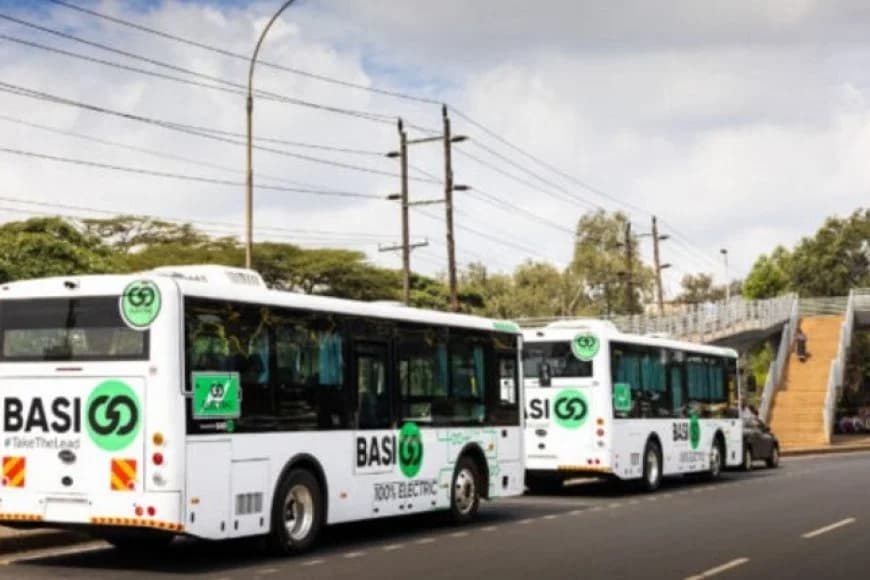
Doreen Orishaba, Managing Director of BasiGo Rwanda has revealed that many transport companies in Rwanda have made a reservation of 132 electric buses. It is roughly three months since BasiGo launched pilot electric buses in public transport in Kigali, in collaboration with city authorities, following their successful introduction in Nairobi, Kenya. The company imports fully-built electric buses from China and works with three public transport company operators in Rwanda. The pilot phase has been successful, winning over customers who had no prior knowledge of the company brand, according to D
Doreen Orishaba, Managing Director of BasiGo Rwanda has revealed that many transport companies in Rwanda have made a reservation of 132 electric buses.
It is roughly three months since BasiGo launched pilot electric buses in public transport in Kigali, in collaboration with city authorities, following their successful introduction in Nairobi, Kenya.
The company imports fully-built electric buses from China and works with three public transport company operators in Rwanda.
The pilot phase has been successful, winning over customers who had no prior knowledge of the company brand, according to Doreen Orishaba, the company's managing director.
"The pilot has really been successful. We had targeted to run it for three months and within these few months, the bus operators have already seen the advantages of going green. We already have reservations for 132 buses," Orishaba told Xinhua in a recent interview.
"Different bus operators have reached out to us and would like to place orders of up to 132 buses . I'm sure the number is going to keep growing. We are really grateful for the enthusiasm with which the market has received these electric buses."
This success has been made possible through factors such as collaboration with innovative Chinese companies.
It is easier to scale when the buses fully built are imported, and the sustainability agenda is clear, according to Orishaba.
A fully charged bus can travel 300 km without the need to be recharged while charging points are installed at specific spots in the capital.
The company's goal is to deliver 100 buses in the next 12 months on the streets of Kigali, and 200 buses in the next two years each with the capacity to carry 70 passengers.
"Our mission is to create the future of electric public transport. We started in Nairobi, and now we are here in Kigali. We are very excited about Rwanda," Orishaba said.
The Rwandan government has been promoting the use of electric locomotives.
Electric and hybrid vehicles are exempted from taxes, one big incentive that makes them a lot more attractive.
The government has also given a better tariff for charging electric vehicles.
The government assigned electric charging stations a larger industrial tariff which is the best tariff in the entire electricity tariff regime in the country.
Even with an enabling environment for electric vehicles, however, there had not been an electric bus in Rwanda until BasiGo came into the space.
BasiGo electric buses are much cheaper to operate, according to Orishaba.
The company's mission is to make the electric bus as affordable to the operator as possible.
The buses are equipped with cameras, so passengers feel a bit safe because the footage can always be traced should anything happen on the bus. The drivers are also able to know what is behind them and what is ahead.
Passengers testify that the bus is quiet, and at the end of the day, they look forward to sitting in that quiet environment, seeking to unwind.



Comments
No comments yet. Be the first to share a thought.