
The Democratic Republic of the Congo and Rwanda have agreed on a fresh set of coordinated measures to advance implementation of their landmark peace agreement, as part of ongoing efforts to translate commitments into progress on the ground. Representatives from both countries met in Washington, D.C. on March 17–18 under the framework of the Washington Accords for Peace and Prosperity, issuing a joint statement alongside the United States outlining concrete steps toward de-escalation. The measures include mutual commitments to respect each other’s sovereignty and territorial integrity, a schedu
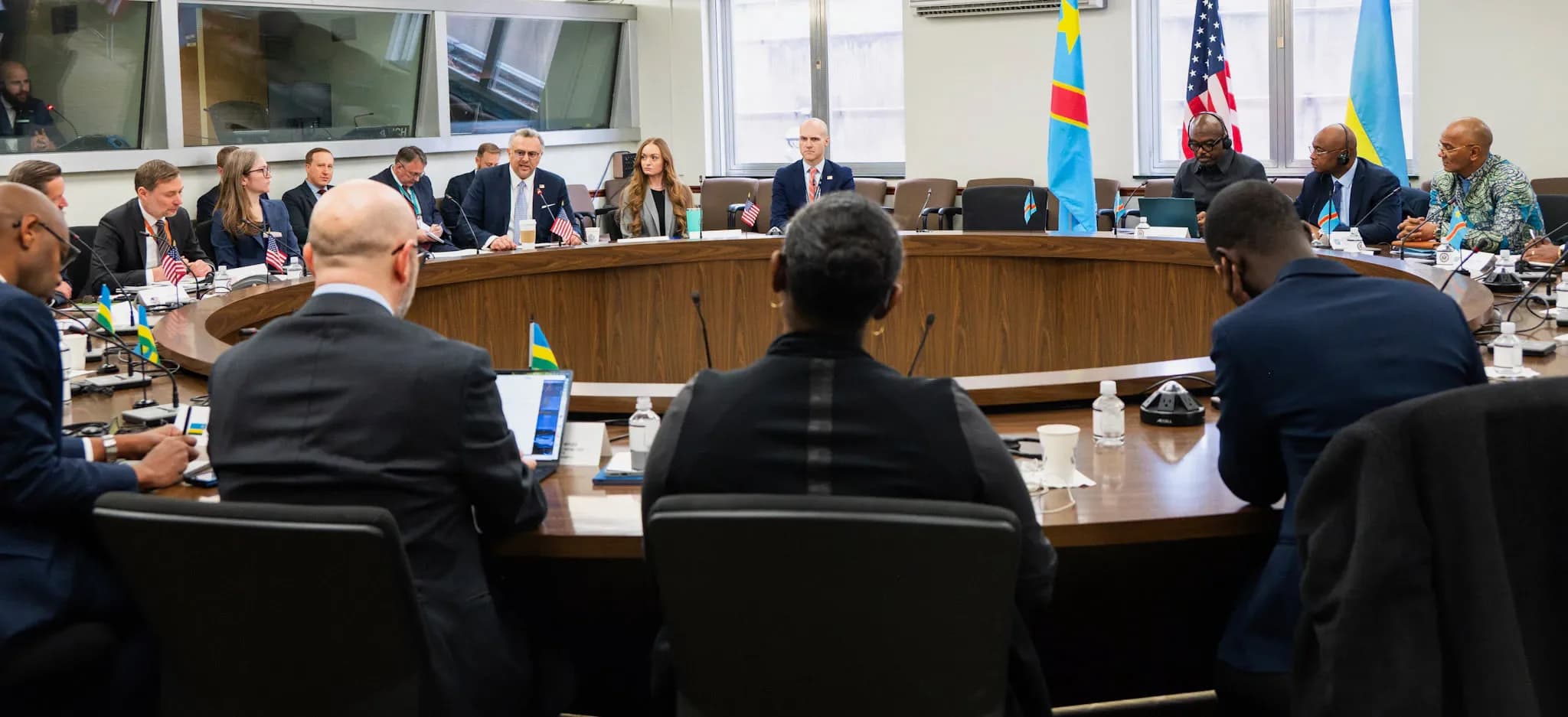
The Democratic Republic of the Congo and Rwanda have agreed on a fresh set of coordinated measures to advance implementation of their landmark peace agreement, as part of ongoing efforts to translate commitments into progress on the ground.
Representatives from both countries met in Washington, D.C. on March 17–18 under the framework of the Washington Accords for Peace and Prosperity, issuing a joint statement alongside the United States outlining concrete steps toward de-escalation.
The measures include mutual commitments to respect each other’s sovereignty and territorial integrity, a scheduled disengagement of Rwandan forces from defined areas in eastern DRC, and time-bound efforts by Kinshasa to intensify operations against the Democratic Forces for the Liberation of Rwanda (FDLR). Both sides also pledged to ensure the protection of civilians.
A fragile peace process
The Washington Accords for Peace and Prosperity stem from a peace agreement reached in June 2025 in Washington, with core provisions requiring the withdrawal of Rwandan troops from eastern DRC and action by the Congolese government against the FDLR. The framework also includes a regional economic integration component centred on critical minerals and supported by U.S. investment.
The agreement was formally signed in December 2025 by Félix Tshisekedi and Paul Kagame in a ceremony hosted by Donald Trump.
However, implementation quickly stalled. Within days of the signing, the March 23 Movement (M23) captured the eastern Congolese city of Uvira, in a move Washington described as a violation of the accord.
In March 2026, the United States imposed sanctions on the Rwanda Defence Force (RDF) and senior commanders, citing their direct support to M23 operations, increasing pressure on Kigali to comply with the agreement.
Meanwhile, rights groups report that despite some withdrawals, violence against civilians has persisted in North and South Kivu, underscoring the fragility of the process.
A central sticking point
The FDLR, which has operated in eastern DRC for decades, remains one of the most contentious elements of the peace effort.
Rwanda has long cited its presence as a security threat, noting that its leadership includes individuals linked to the 1994 genocide against the Tutsi. The Congolese government denies providing support to the group, and disagreements over how and when it should be neutralised have repeatedly complicated negotiations.
Parallel M23 track unresolved
The March 18 statement addresses the bilateral DRC–Rwanda dimension of the conflict, but a parallel negotiation track between Kinshasa and M23 remains unresolved.
M23 and its political wing, the Alliance Fleuve Congo (AFC), have previously said any agreement reached without their participation would not be binding on them.
Earlier this month, Prime Minister Judith Suminwa introduced legislation to parliament to ratify both the Washington Peace Accords and a broader U.S. strategic partnership agreement.
Both Kinshasa and Kigali reaffirmed their commitments under the Washington Accords to achieve lasting peace and prosperity in the region.



Comments
No comments yet. Be the first to share a thought.