
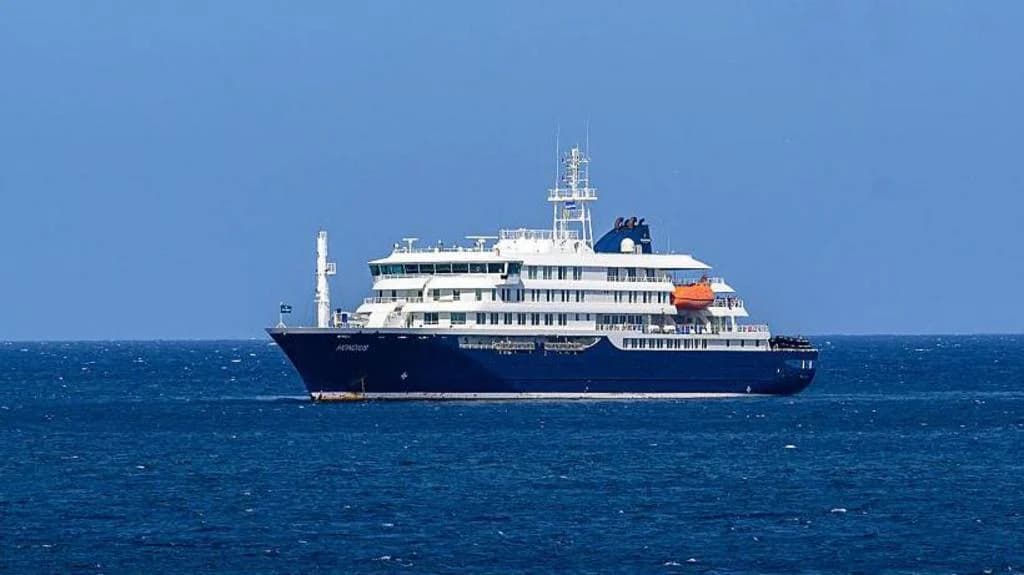
Three passengers have died and several others have fallen ill following a suspected hantavirus outbreak aboard the expedition cruise vessel MV Hondius, prompting an international health investigation as the ship remains anchored off the coast of Cape Verde. According to the World Health Organization, seven cases have been identified as of May 4, including two laboratory-confirmed infections and five suspected cases. One patient, a British national, remains in critical condition at a private medical facility in Johannesburg, though health officials say his condition is improving. Health authori
Three passengers have died and several others have fallen ill following a suspected hantavirus outbreak aboard the expedition cruise vessel MV Hondius, prompting an international health investigation as the ship remains anchored off the coast of Cape Verde.
According to the World Health Organization, seven cases have been identified as of May 4, including two laboratory-confirmed infections and five suspected cases. One patient, a British national, remains in critical condition at a private medical facility in Johannesburg, though health officials say his condition is improving.
Health authorities are working to determine how the virus spread aboard the ship, which carried 147 individuals, 88 passengers and 59 crew members, from 23 countries on an extended expedition voyage.
The MV Hondius departed Ushuaia in southern Argentina on April 1, 2026, and followed a route through mainland Antarctica, South Georgia, Nightingale Island, Tristan da Cunha, Saint Helena and Ascension Island before arriving in Cape Verdean waters on May 3.
Officials say the outbreak is most likely linked to environmental exposure during the voyage. Hantavirus is typically transmitted through contact with infected rodents, particularly via their urine, droppings or saliva, often when contaminated particles become airborne. ALSO READ: What is Hantavirus? Everything You Need to Know
Authorities have identified two of the deceased as a Dutch couple. A 70-year-old man developed symptoms on April 6 and died on April 11 while on board, with his body disembarked at Saint Helena. His 69-year-old wife, who had been in close contact with him, later collapsed during a flight to Johannesburg and died upon arrival at OR Tambo International Airport on April 26. She was subsequently confirmed as a hantavirus case by PCR testing on May 4. Contact tracing has been initiated for passengers who were on the same flight. A German national also died on board the vessel on May 2, also a suspected case.
Cape Verdean authorities have refused permission for the Hondius to dock, leaving the 147 people on board stranded. The vessel's operator, Oceanwide Expeditions, said it is exploring alternative ports, with the ship expected to sail toward Spain's Canary Islands, including Las Palmas or Tenerife, pending clearance.
The WHO said it is supporting laboratory investigations, with additional samples from symptomatic passengers being sent to the Institut Pasteur de Dakar in Senegal for testing alongside work already underway at South Africa's National Institute for Communicable Diseases.
Experts stress that hantavirus does not spread easily between people. However, investigators are examining the potential role of the Andes virus, the only known hantavirus strain capable of limited human-to-human transmission. The strain is primarily found in parts of South America, including Chile and Argentina, regions linked to the ship's point of departure. Such transmission requires close and prolonged contact and remains extremely rare. ALSO READ: What is Hantavirus? Everything You Need to Know
The WHO has emphasised that the broader public health risk remains low and has advised against travel restrictions. Passengers and crew aboard the vessel are undergoing precautionary monitoring and isolation measures. The WHO is advising all those on board to monitor themselves for symptoms for 45 days following disembarkation.
Hantavirus infections are rare but can be severe. Early symptoms typically include fever, fatigue and muscle aches, but the disease can rapidly progress to serious complications affecting the lungs or other organs.



Comments
No comments yet. Be the first to share a thought.