
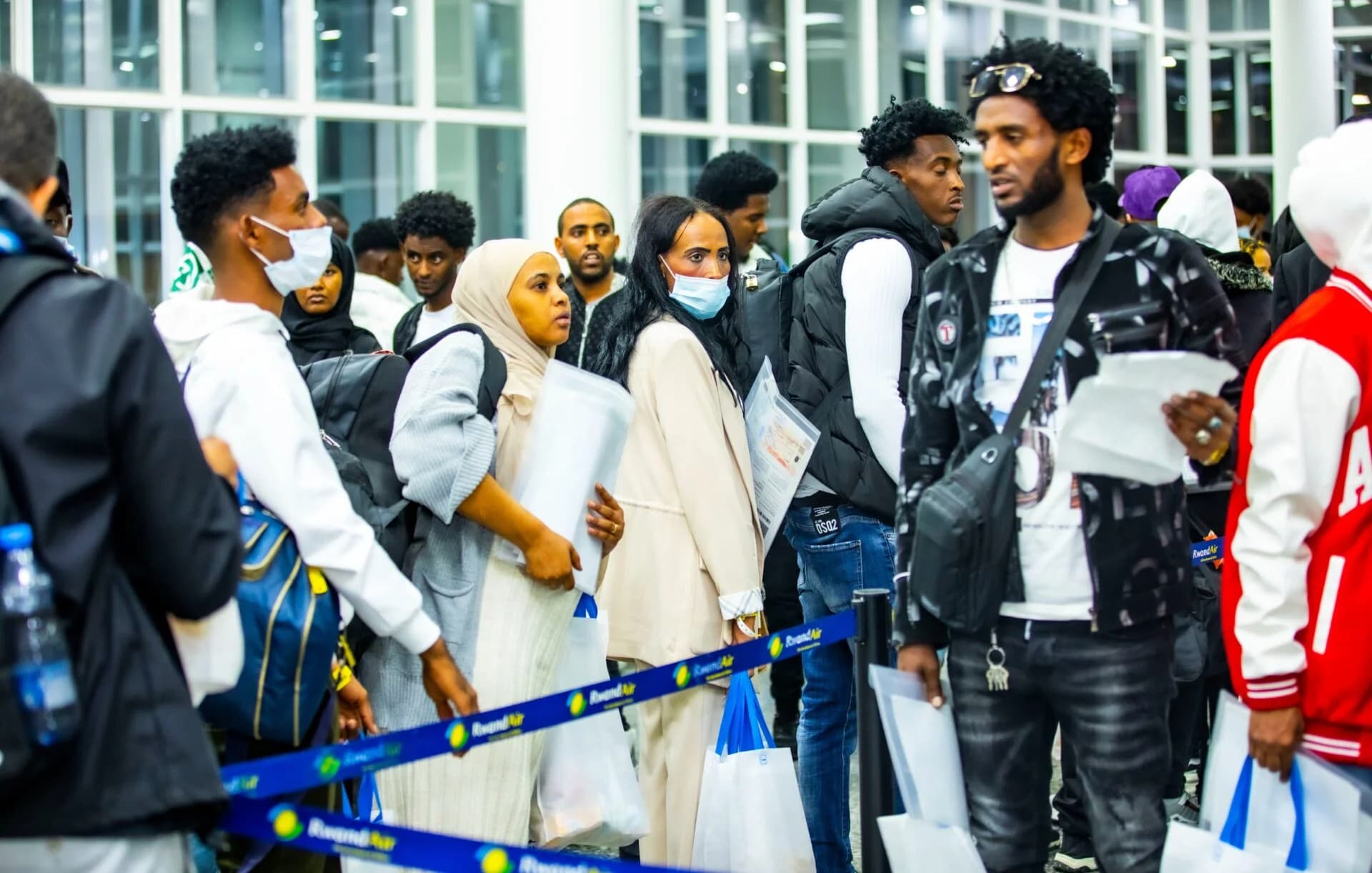
More than 160 vulnerable asylum seekers have arrived safely in Rwanda after being evacuated from detention centres in Libya, in the latest humanitarian transfer under Africa's Emergency Transit Mechanism. The group, reported to number 164 people, was flown to Kigali before being transferred to the Gashora Transit Centre in Bugesera District, where they will receive protection, medical screening, and psychosocial support. The evacuees include men, women, and children, primarily from Sudan and Eritrea, who had been identified as particularly vulnerable. Rwanda received the 15th group of African
More than 160 vulnerable asylum seekers have arrived safely in Rwanda after being evacuated from detention centres in Libya, in the latest humanitarian transfer under Africa's Emergency Transit Mechanism.
The group, reported to number 164 people, was flown to Kigali before being transferred to the Gashora Transit Centre in Bugesera District, where they will receive protection, medical screening, and psychosocial support. The evacuees include men, women, and children, primarily from Sudan and Eritrea, who had been identified as particularly vulnerable.
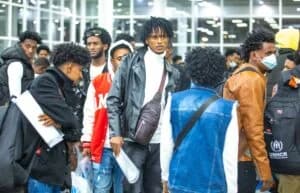
Rwanda received the 15th group of African refugees and asylum seekers evacuated from Libya on Thursday night
The evacuation was carried out under the Emergency Transit Mechanism, a partnership launched in 2019 between the Government of Rwanda, the United Nations High Commissioner for Refugees, and the African Union. UNHCR has repeatedly described the mechanism as a lifeline for refugees and asylum seekers trapped in dire conditions in Libya, where many migrants face arbitrary detention, abuse, and exploitation.
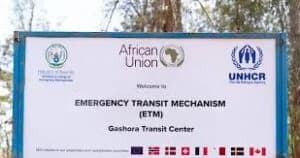
Rwanda's ETM Center in Gashora ©UNHCR/Eugene Sibomana
At the Gashora Transit Centre, asylum seekers are registered and assessed by protection officers. From there, they may be resettled to third countries, voluntarily repatriated if conditions allow, or, in limited cases, locally integrated. Since the mechanism began in 2019, thousands have transited through Rwanda under the arrangement, with many since resettled abroad while others remain in temporary protection as longer-term solutions are negotiated.
Rwanda's participation has drawn international attention, positioning the country as a central humanitarian actor in regional protection efforts. Officials have previously stated that Rwanda remains committed to offering temporary protection to those evacuated from Libya, providing accommodation, healthcare, and education access for children while durable solutions are sought.
Libya has long been a key transit point for migrants attempting to reach Europe. Deteriorating security conditions and documented human rights abuses in Libyan detention facilities prompted the creation of emergency evacuation schemes, of which the ETM remains among the most structured on the continent.
The agreement has been renewed multiple times, reflecting continued cooperation between Kigali, UNHCR, and the African Union, though UNHCR has noted that evacuations depend on funding availability and cooperation among host and resettlement countries.
Human rights organisations have emphasised that while evacuation programmes save lives, they address only part of a much larger migration and protection crisis affecting North and Sub-Saharan Africa. For the 164 people who landed in Kigali, however, the immediate reality is more personal, a transition from confinement and uncertainty to relative safety and structured support, as the process of determining their futures begins.



Comments
No comments yet. Be the first to share a thought.