
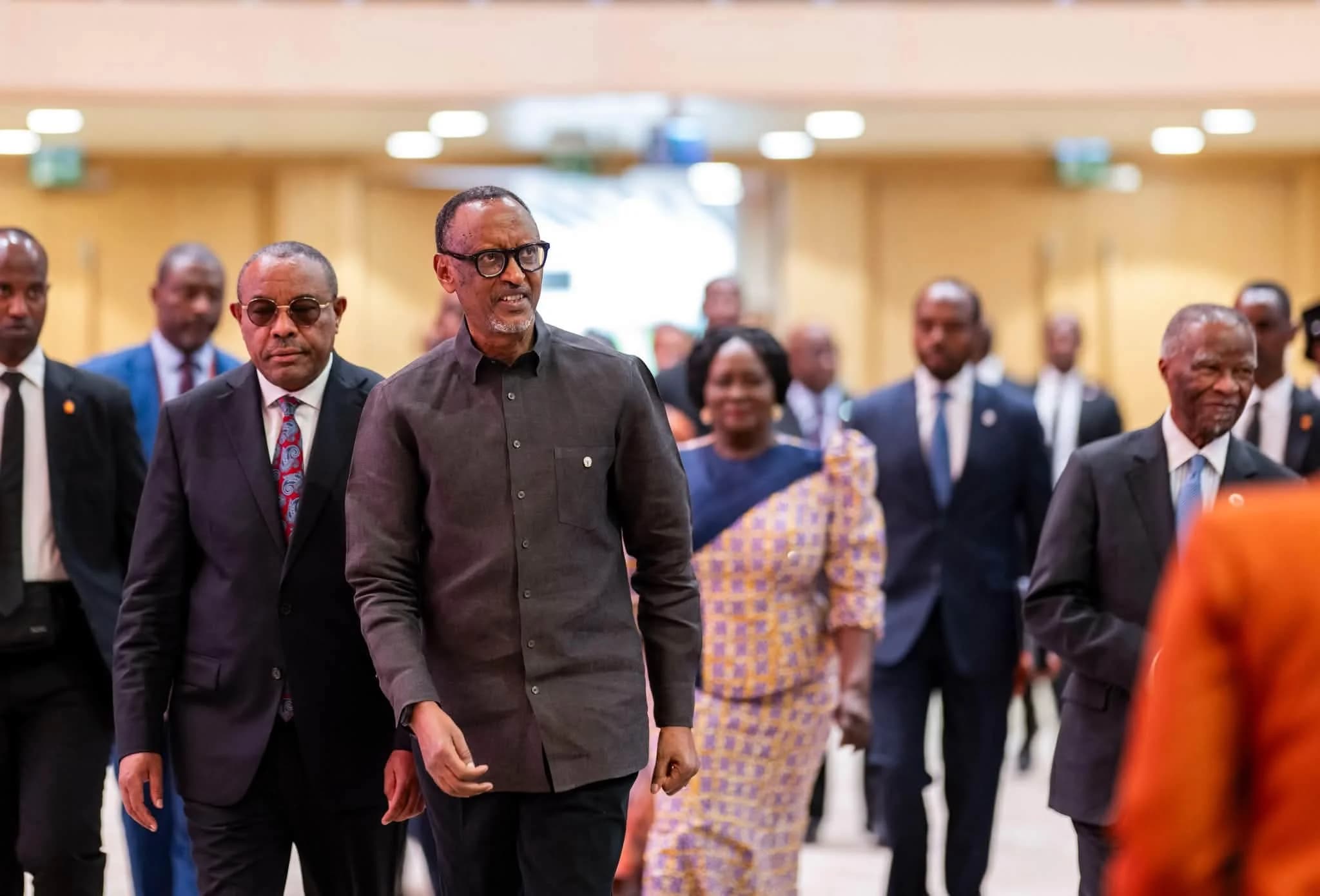
President Paul Kagame has called on Africans to rethink the way they view themselves and the rest of the world, arguing that Africa cannot transform while some of its people continue to place outsiders on a higher pedestal than their fellow Africans. Kagame made the remarks at the Africa Mindset Reset Forum in Kigali, where he joined a high-level panel discussing the theme “From Pan-Africanism to Meta-Africanism.” The forum brought together former Ethiopian Prime Minister and African School of Governance co-founder Hailemariam Desalegn, Ghana’s Vice President Prof. Jane Naana Opoku-Agyemang,
President Paul Kagame has called on Africans to rethink the way they view themselves and the rest of the world, arguing that Africa cannot transform while some of its people continue to place outsiders on a higher pedestal than their fellow Africans. Kagame made the remarks at the Africa Mindset Reset Forum in Kigali, where he joined a high-level panel discussing the theme “From Pan-Africanism to Meta-Africanism.” The forum brought together former Ethiopian Prime Minister and African School of Governance co-founder Hailemariam Desalegn, Ghana’s Vice President Prof. Jane Naana Opoku-Agyemang, former South African President Thabo Mbeki, and African Development Bank President Dr. Sidi Ould Tah. The discussion focused on how Africa can build on the dignity and solidarity associated with Pan-Africanism while developing a new mindset for how the continent thinks, leads, builds and educates. Kagame argued that Africa’s transformation must begin with changing African attitudes and behaviour, not simply producing more strategies and declarations. He questioned why some Africans are quick to praise people from outside the continent while failing to recognize and support African talent. In his view, Africa already has people capable of doing great things, but the continent needs to create stronger systems of confidence, cooperation and support that allow those capabilities to grow. The Rwandan president also warned that constantly looking outside Africa for validation can have political and economic consequences. He argued that when Africans undervalue themselves and elevate outsiders, they can eventually become people who receive instructions from others and then complain about the decisions made for them. His message fits directly into the forum’s broader debate on moving from Pan-Africanism to Meta-Africanism a proposed new chapter focused on resetting how Africans think, lead, build and educate, while turning continental solidarity into practical action and greater self-determination.



Comments
No comments yet. Be the first to share a thought.