
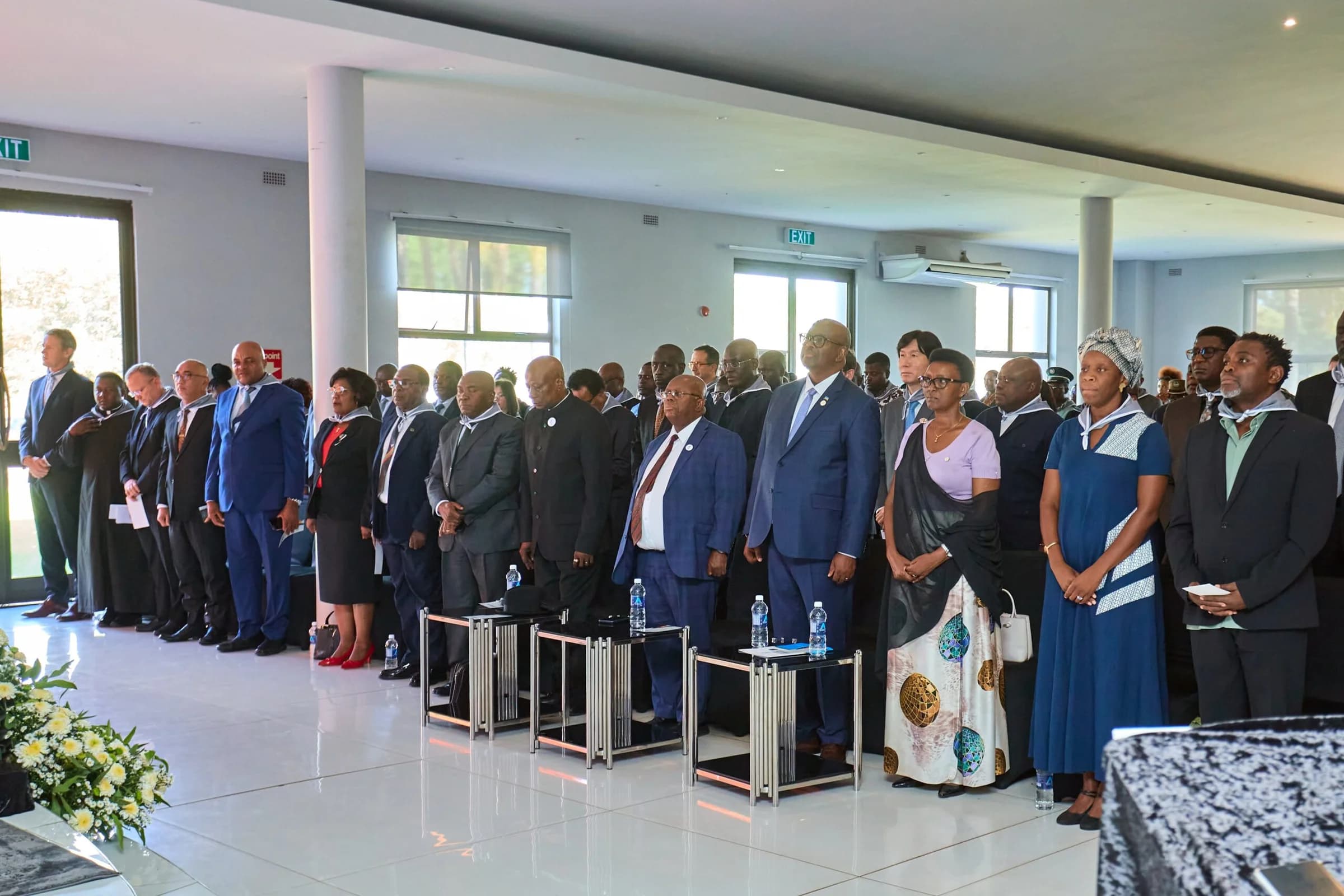
As Rwanda and the world marked the 32nd commemoration of the 1994 Genocide against the Tutsi on April 7, strong calls were made to confront genocide denial and renew global commitment to preventing mass atrocities. During a remembrance event attended by over 480 participants, including diplomats, government officials, and members of the Rwandan community in Zambia, Ambassador Emmanuel Bugingo warned that silence in the face of genocide denial only allows it to spread further. He stressed that such narratives are not only false but criminal, emphasizing that “denying the Genocide is not truth,
As Rwanda and the world marked the 32nd commemoration of the 1994 Genocide against the Tutsi on April 7, strong calls were made to confront genocide denial and renew global commitment to preventing mass atrocities.
During a remembrance event attended by over 480 participants, including diplomats, government officials, and members of the Rwandan community in Zambia, Ambassador Emmanuel Bugingo warned that silence in the face of genocide denial only allows it to spread further. He stressed that such narratives are not only false but criminal, emphasizing that “denying the Genocide is not truth, but a crime,” and that ignoring it fuels its expansion.
Reflecting on history, Bugingo highlighted that the Genocide against the Tutsi, which claimed over one million lives in just 100 days, was not spontaneous but the result of years of division introduced during colonial rule. He noted how identity classifications, including ethnic labels on identity cards, were artificially constructed and later weaponized to divide Rwandans who once shared a common language and culture.
He further pointed to ongoing threats, particularly in the Great Lakes region. In eastern Democratic Republic of Congo, targeted violence against Tutsi communities persists, often fueled by genocide ideology spread through digital platforms. Bugingo warned that such developments pose a serious risk to regional stability and must not be ignored.
Echoing similar concerns, Ambassador James Musoni, speaking at a parallel Kwibuka32 event in Zimbabwe, called on the international community to learn from its past failures. He emphasized that despite clear warning signs in 1994, the world failed to act, resulting in catastrophic consequences. “Silence and indifference in the face of injustice can have devastating outcomes,” he noted.
Musoni, however, highlighted Rwanda’s remarkable journey of recovery, pointing to national unity, justice mechanisms, and reconciliation efforts as pillars of transformation. He underscored that accountability remains essential, especially as some perpetrators continue to spread division through modern communication platforms.
International voices reinforced these messages. Douty Chibamba acknowledged the global community’s failure during the genocide and urged collective responsibility in preventing future atrocities. Similarly, James Wakiaga reiterated that the international community abandoned Rwanda, stressing the importance of confronting hate speech and promoting human dignity.
The United Nations has designated April 7 as the International Day of Reflection on the Genocide against the Tutsi, a reminder of the world’s obligation to ensure such atrocities never happen again. As leaders and communities gathered under Kwibuka32, the message was clear: remembrance must go beyond mourning it must inspire action, vigilance, and a united stand against denial, division, and injustice.



Comments
No comments yet. Be the first to share a thought.