
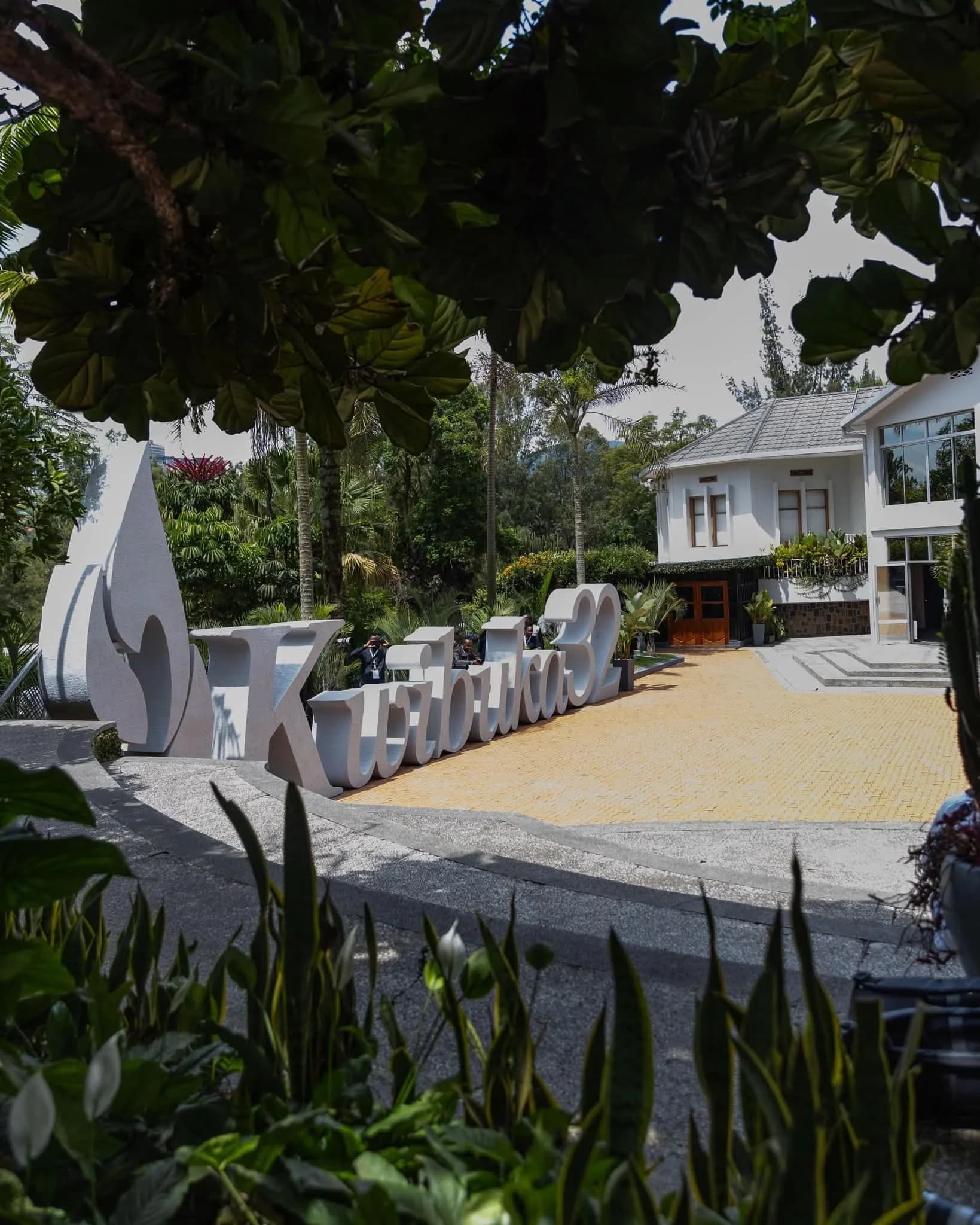
President Paul Kagame and First Lady Jeannette Kagame have officially launched the 32nd commemoration of the 1994 Genocide against the Tutsi, known as Kwibuka32, by lighting the Flame of Hope—a symbol of resilience and the future of the Rwandan people. The national event took place at the Kigali Genocide Memorial in Gisozi, where over 259,000 victims of the Genocide against the Tutsi are laid to rest. These remains were collected from the districts of Gasabo, Kicukiro, and Nyarugenge in the City of Kigali. April 7 marks the International Day of Reflection on the 1994 Genocide against the Tuts
President Paul Kagame and First Lady Jeannette Kagame have officially launched the 32nd commemoration of the 1994 Genocide against the Tutsi, known as Kwibuka32, by lighting the Flame of Hope—a symbol of resilience and the future of the Rwandan people. The national event took place at the Kigali Genocide Memorial in Gisozi, where over 259,000 victims of the Genocide against the Tutsi are laid to rest. These remains were collected from the districts of Gasabo, Kicukiro, and Nyarugenge in the City of Kigali. April 7 marks the International Day of Reflection on the 1994 Genocide against the Tutsi, a day observed annually across the world. The genocide claimed the lives of more than one million people in just 100 days. Before lighting the Flame of Hope, President Kagame and the First Lady paid tribute to the victims by laying wreaths on the mass graves and observing a moment of silence in honor of those who perished. The Flame of Hope will burn for 100 days, reflecting the duration of the genocide and serving as a reminder of the country’s journey from tragedy to unity and renewal. Dignitaries present at the ceremony included representatives of the diplomatic corps accredited to Rwanda, as well as leaders of genocide survivors’ organizations such as IBUKA, AVEGA Agahozo, and AERG. Speaking during the event, the Minister of National Unity and Civic Engagement, Jean Damascène Bizimana, emphasized that the genocide was deliberately planned and executed, while the international community failed to act to prevent or stop it. He noted that member states of the United Nations did not intervene, and that the African Union also acknowledged its inaction, citing a lack of political will and abandonment of Rwanda during its darkest hour. Dr. Bizimana added that some countries, including the United States, have since apologized and recognized their role in failing to prevent the genocide. Others, such as Belgium and France, have also acknowledged their responsibility. According to a national census conducted by the Ministry of Local Government between 2000 and 2002, a total of 1,074,017 Tutsi were killed during the genocide. This translates to an average of 10,074 people murdered every single day over the 100-day period. As Rwanda begins this solemn week of remembrance, Kwibuka32 stands as a powerful call to preserve memory, uphold unity, and ensure that such a tragedy never happens again.



Comments
No comments yet. Be the first to share a thought.