
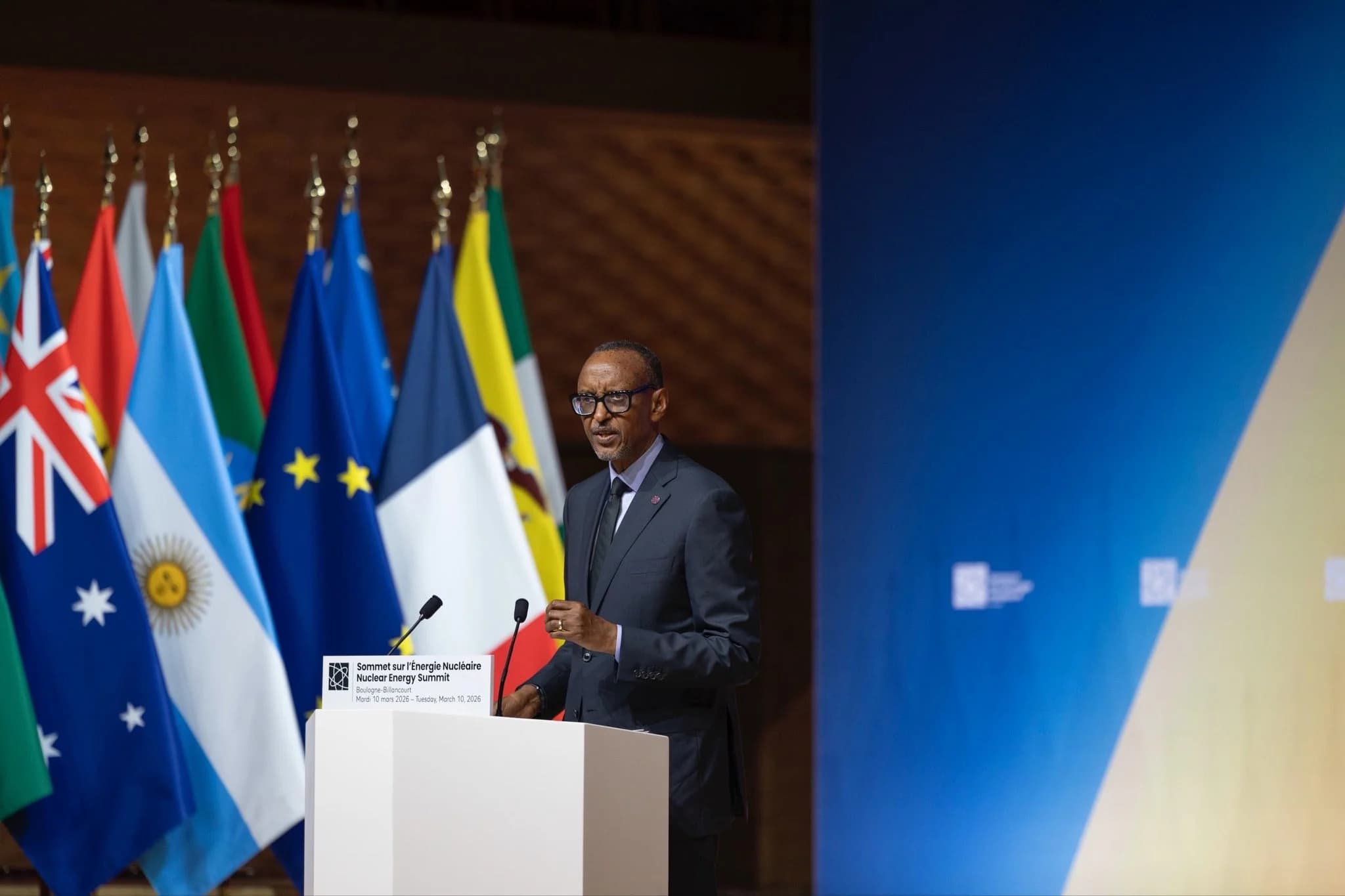
Paris, France – 10 th March 2026, Rwandan President Paul Kagame and French President Emmanuel Macron are today leading a high stakes global summit in Paris, signaling a major turning point for nuclear power. For President Kagame, the gathering isn't just about diplomacy, it's a critical push to secure a new, powerful energy foundation for Rwanda’s economic future specifically through innovative Small Modular Reactors (SMRs). This visit cements a shift in Rwandan energy policy. While the nation has historically been an African leader in renewable energy, President Kagame’s presence at the 2 nd
Paris, France – 10th March 2026,
Rwandan President Paul Kagame and French President Emmanuel Macron are today leading a high stakes global summit in Paris, signaling a major turning point for nuclear power. For President Kagame, the gathering isn't just about diplomacy, it's a critical push to secure a new, powerful energy foundation for Rwanda’s economic future specifically through innovative Small Modular Reactors (SMRs). This visit cements a shift in Rwandan energy policy. While the nation has historically been an African leader in renewable energy, President Kagame’s presence at the 2
nd
World Nuclear Energy Summit broadcast a clear message, wind, solar and hydro, while vital, are no longer sufficient to power Rwanda's industrial ambitions alone.
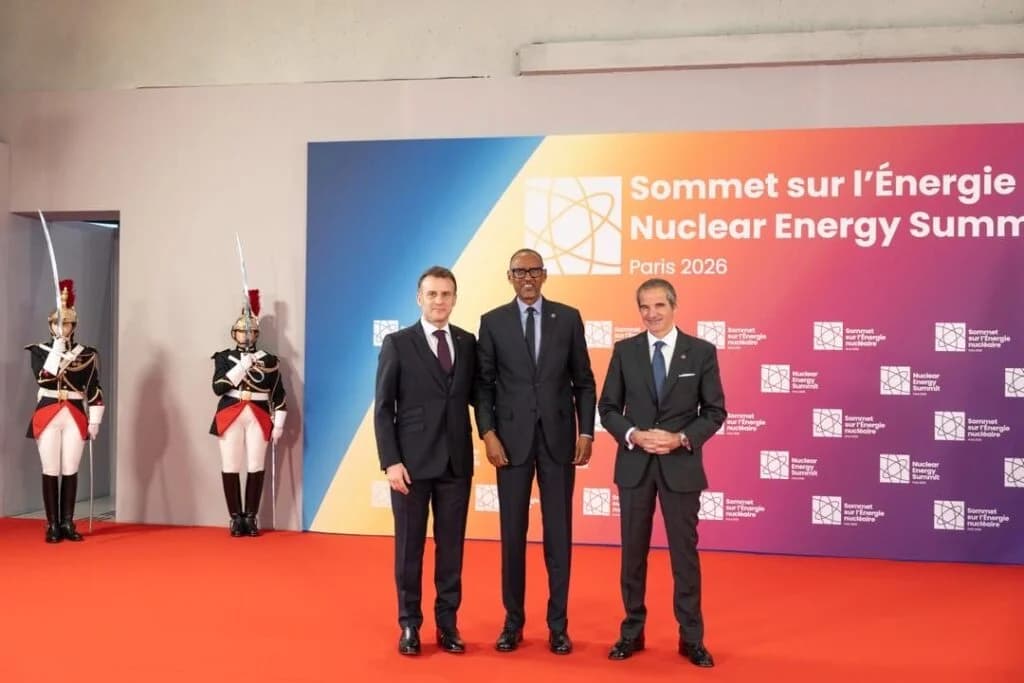
from left to right, French President Emmanuel Macron, Rwandan President Paul Kagame and Director General of IAEA Rafael Mariano Grossi during World Nuclear Energy Summit
The pragmatic choice traditional nuclear power plants are colossal, expensive infrastructure projects, often ill-suited for the grid and budget constraints of developing economies. Rwanda’s strategy is focusing sharply on Small Modular Reactors (SMRs). These reactors are smaller, can be constructed in factories and transported, and offer a faster, more flexible alternative to power specific regions or industrial parks. For Rwanda, SMRs are viewed as a plug and play solution to add reliable, weather independent baseload power to the national grid.
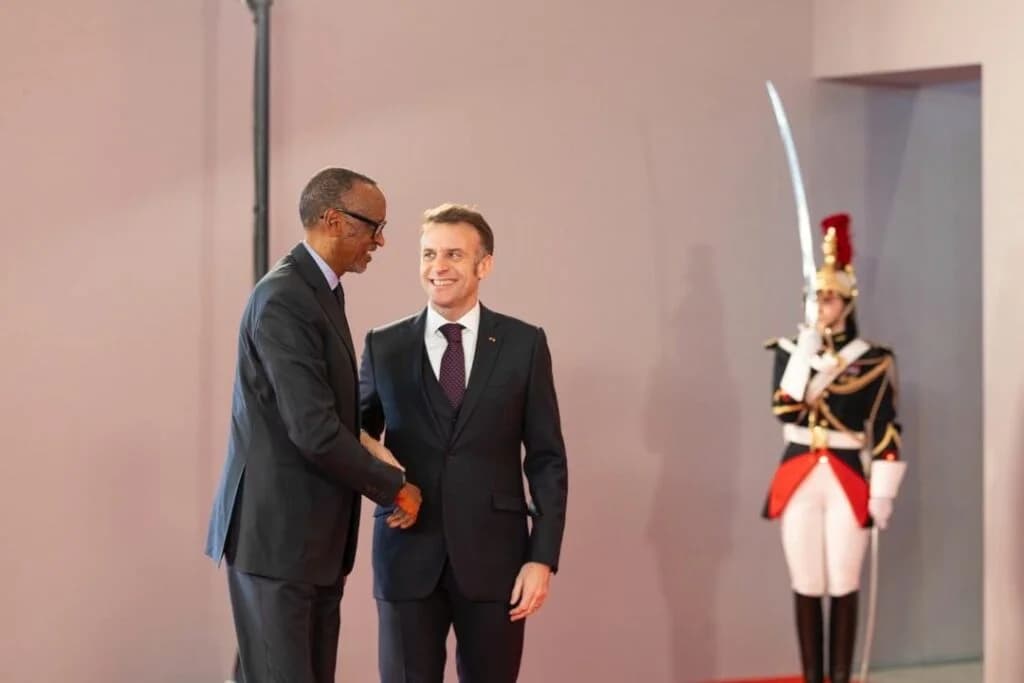
President Kagame’s pitch in Paris is bolstered by recent, significant bureaucratic momentum. On March 9
th
, 2026, just ahead of the summit, the International Atomic Energy Agency (IAEA) announced its formal approval, confirming that Rwanda has made satisfactory progress in establishing the necessary legal and regulatory frameworks for a nuclear energy program. "We cannot innovate with one hand and maintain an obsolete financial architecture with the other," President Kagame declared. He called upon international development banks to urgently reform their lending models, pointing out that current financial structures are not designed to support African nations investing in nuclear technology. "Nuclear is a strategic asset for our industrialization, the funding must follow that reality." He added.
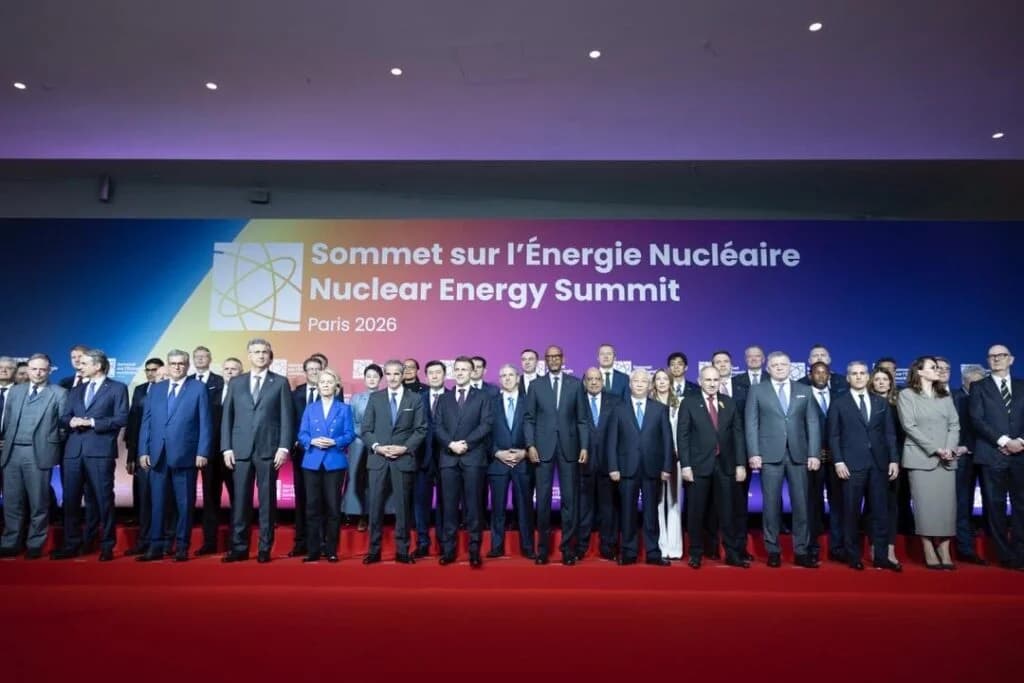
President Kagame’s visit to Paris is not just about power generation, it is an assertion of Rwanda's desire for energy sovereignty and a place at the table of technological advancement. By embracing SMRs, President Kagame is placing a bet that nuclear is the key to locking in Rwanda's transition from an agricultural base to an industrial economy. With the IAEA approval and the visible support from President Macron, Rwanda is positioning itself as the continent’s trailblazer for the 21
st
century atomic leap.



Comments
No comments yet. Be the first to share a thought.