
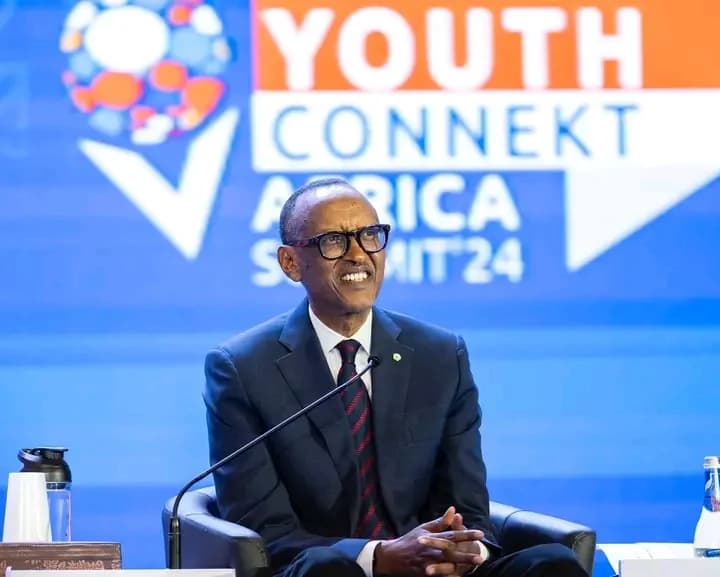
In a powerful address at YouthConnekt, President Paul Kagame of Rwanda shared a deeply personal account of his childhood experiences, marked by political upheaval and displacement. His words were not only a window into his past but a resonant reminder of the enduring challenges faced by many on the African continent due to unresolved issues of governance and leadership. Recounting his early years, Kagame reflected on growing up in a refugee camp, a place where life lessons came not from textbooks but from the stark realities of survival and resilience. At twelve years old, he asked his father
In a powerful address at YouthConnekt, President Paul Kagame of Rwanda shared a deeply personal account of his childhood experiences, marked by political upheaval and displacement. His words were not only a window into his past but a resonant reminder of the enduring challenges faced by many on the African continent due to unresolved issues of governance and leadership. Recounting his early years, Kagame reflected on growing up in a refugee camp, a place where life lessons came not from textbooks but from the stark realities of survival and resilience. At twelve years old, he asked his father a poignant question, one that any young mind might wonder in such circumstances: “What did we do? Why are we here?” His father’s response was a story one that, though long, laid bare the roots of their struggles: politics, poor leadership, and the turbulent intersection of colonialism and the newly emerging independent states. His father’s words carried the weight of a broader historical context, of Africa’s colonial past and its struggles for independence. However, this was not merely a recounting of history; Kagame’s reflection on his family’s experience during the sixties served as a powerful indictment of the present. “It is disheartening,” he stated, noting that the issues that drove his family to the refugee camp decades ago are still evident in parts of Africa today. Kagame’s message was especially directed at the younger generation, who, he noted, continue to bear the brunt of political and governance failures. These young people many of whom have the potential to drive progress and transformation often find themselves caught in cycles of poverty, conflict, and displacement due to the missteps of those in power. Kagame’s address was not just a lament; it was a call to action for African leaders and youth alike to break these cycles and create a continent free from the vestiges of colonial legacies and governance failures. He emphasized that no child, regardless of where they are born, should ever have to experience the hardships he faced at such a young age. The fact that such issues persist, he argued, signals a failure to fully address the root causes of these problems and underscores the urgent need for ethical leadership and accountable governance. As Kagame’s speech resonated with the audience, his words highlighted a truth that is as pressing now as it was then: the need to confront and rectify political mismanagement and leadership shortcomings that continue to hinder Africa’s potential. His call at YouthConnekt was a reminder of the legacy that today’s leaders leave behind, one that could either perpetuate or dismantle the cycles of poverty and displacement that have affected countless lives, including his own.

Comments
No comments yet. Be the first to share a thought.