
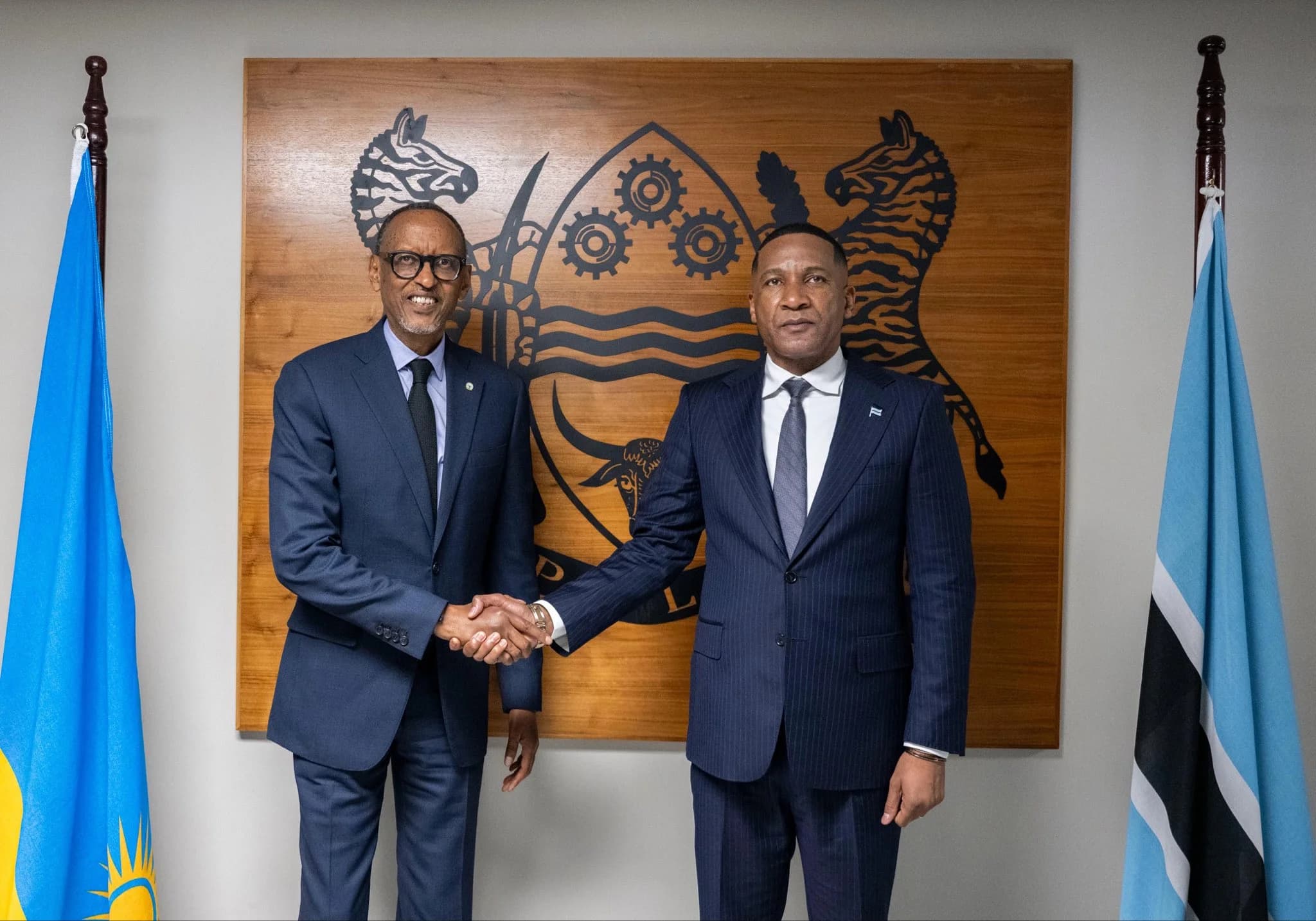
Rwanda and Botswana have abolished visa requirements for all passport holders travelling between the two countries, one of six bilateral agreements signed in Gaborone on Wednesday during a state visit by President Paul Kagame, marking the most significant diplomatic engagement between the two nations since 2019. The agreements, signed on May 6 in Gaborone, deepen cooperation across key sectors including taxation, aviation, trade, investment and health. They were witnessed by President Paul Kagame and President Duma Gideon Boko following a closed-door tête-à-tête meeting and formal bilateral t
Rwanda and Botswana have abolished visa requirements for all passport holders travelling between the two countries, one of six bilateral agreements signed in Gaborone on Wednesday during a state visit by President Paul Kagame, marking the most significant diplomatic engagement between the two nations since 2019.
The agreements, signed on May 6 in Gaborone, deepen cooperation across key sectors including taxation, aviation, trade, investment and health. They were witnessed by President Paul Kagame and President Duma Gideon Boko following a closed-door tête-à-tête meeting and formal bilateral talks involving delegations from both countries at State House.
According to Rwanda’s Ministry of Foreign Affairs and International Cooperation, the six instruments signed include a Memorandum of Understanding on Mutual Visa Abolition for holders of Diplomatic, Service/Official, and Ordinary/National Passports; a Double Taxation Avoidance Agreement; a Bilateral Air Service Agreement (BASA); an MoU on Economic, Trade and Investment; an MoU between the Botswana Investment and Trade Centre and the Rwanda Development Board; and an MoU on Cooperation in the field of Health.
President Boko confirmed that the visa abolition agreement takes immediate effect, noting that Rwanda has already implemented the arrangement while Botswana will follow through as part of the implementation process.
The signing marked the centrepiece of Kagame’s first visit to Botswana since 2019 and followed the Second Joint Permanent Commission on Cooperation (JPCC), a technical forum that reviewed and cleared several proposals ahead of the presidential-level negotiations.
Speaking at a joint press briefing, both leaders stressed that the value of the agreements would depend on implementation rather than ceremony.
President Boko said the two leaders had not met merely to exchange diplomatic pleasantries, describing the discussions as a push for strategic cooperation backed by timelines and accountability mechanisms. He warned against delays, saying: “When you are contesting against time, the casualties will be on your side.”
Kagame echoed the same position, saying the agreements must deliver practical results for citizens and businesses in both countries.
“What we agree here must translate into tangible improvements in the lives of our citizens,” Kagame said, adding that the partnership would ultimately be judged by outcomes rather than signed documents.
Kagame also described the Rwanda-Botswana relationship as one grounded in shared purpose and practical cooperation.
“What defines the relationship between Rwanda and Botswana is not only friendship, but also a shared sense of purpose,” he said.
President Boko said Botswana had much to learn from Rwanda while also offering lessons from its own development experience. He identified education, health, agriculture, food security, youth empowerment, sports development, employment creation, infrastructure and regional connectivity as areas for expanded cooperation.
Rwanda has expressed interest in Botswana’s diamond value chain and expertise in pharmaceutical and vaccine production, while Botswana is looking to draw from Rwanda’s digital transformation and investment facilitation model through the Rwanda Development Board.
On Thursday, the second and final day of the visit, Kagame toured the Botswana Diamond Trading Company, signaling Rwanda’s interest in strengthening cooperation in the minerals sector.
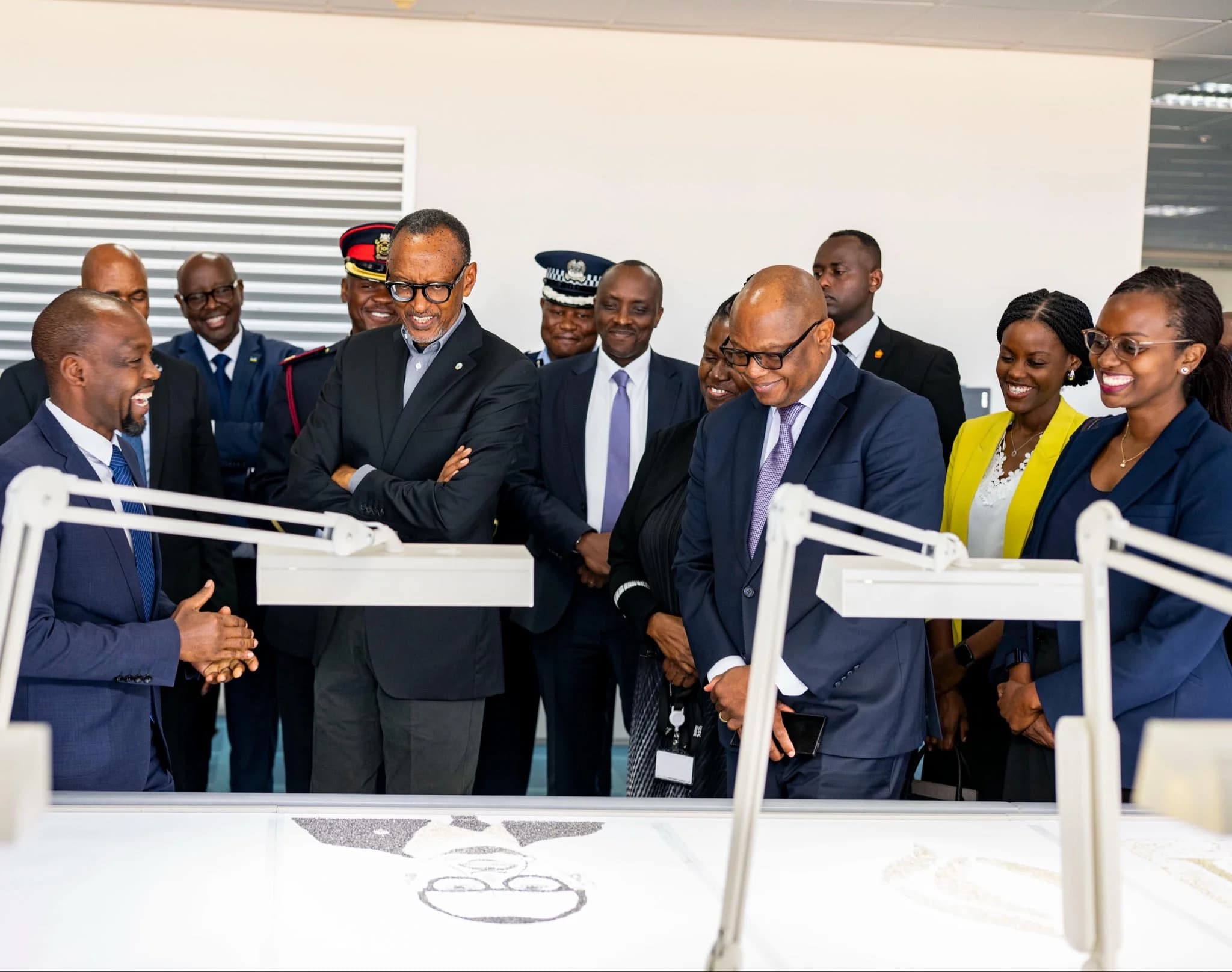
President Kagame toured Diamond Trading Company Botswana (DTC Botswana) in Gaborone, on Thursday. /UrugwiroVillage
Although trade volumes between the two countries remain relatively low, officials from both sides used the Gaborone engagement to outline a framework aimed at expanding commercial ties and reducing barriers to investment and movement.
The formal foundation of relations between Rwanda and Botswana dates back to 2019, when both countries signed a General Framework Agreement establishing the JPCC as the primary coordination mechanism across sectors including trade, investment, tourism, agriculture, health and security.
Wednesday’s package of agreements moves that framework into a more operational phase, with officials reportedly agreeing on a three-month timeline to conclude outstanding matters and a biannual review mechanism intended to ensure accountability and follow-through.
Analysts say the growing partnership could also shape broader continental priorities, including implementation of the African Continental Free Trade Area and coordinated approaches to regional peace and security.
The state visit was preceded by the Second Rwanda-Botswana Business Forum, held on May 5 and 6, which brought together government officials and private sector representatives from both countries immediately after the second JPCC session, a sequence that underscored the emphasis on economic cooperation alongside diplomatic engagement.



Comments (1)
It's the best time to make a few plans for the long run and it's time to be happy.I've learn this put up and if I may I ant to recommend you few interesting issues or advice. Perhaps you could write subsequent articles relating to this article. I want to learn more things about it!