
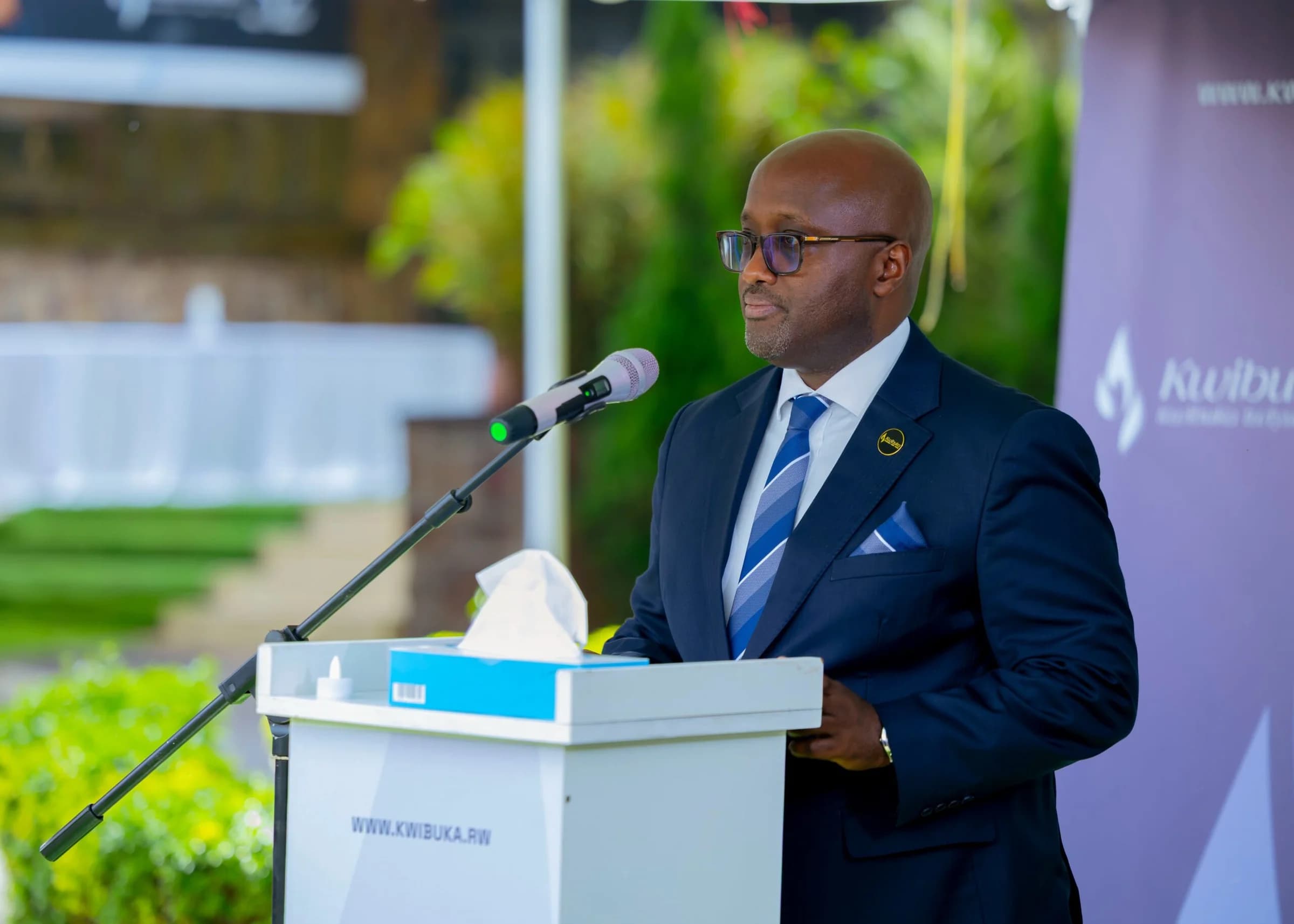
Rwanda's Minister of Foreign Affairs and International Cooperation, Olivier Nduhungirehe, on April 22, 2026 called on the United Nations to take stronger action against genocide denial and the continued presence of genocidal militias in eastern Democratic Republic of Congo, speaking at a Kwibuka32 commemoration ceremony hosted by the UN Rwanda country team. Minister Olivier Nduhungirehe addressing UN staffs Addressing UN staff, diplomats, and survivors at the ceremony, Nduhungirehe paid tribute to the 64 UN personnel killed during the 1994 Genocide against the Tutsi, the ten Belgian paratroope
Rwanda's Minister of Foreign Affairs and International Cooperation, Olivier Nduhungirehe, on April 22, 2026 called on the United Nations to take stronger action against genocide denial and the continued presence of genocidal militias in eastern Democratic Republic of Congo, speaking at a Kwibuka32 commemoration ceremony hosted by the UN Rwanda country team.
Minister Olivier Nduhungirehe addressing UN staffs
Addressing UN staff, diplomats, and survivors at the ceremony, Nduhungirehe paid tribute to the 64 UN personnel killed during the 1994 Genocide against the Tutsi, the ten Belgian paratroopers murdered on the first day of the killings while protecting then-Prime Minister Agathe Uwilingimana, and Captain Mbaye Diagne of Senegal, who saved up to 1,000 Tutsi before being killed.
The minister acknowledged individual acts of courage within UNAMIR during the Genocide, including by the Ghanaian contingent, and recognized Security Council ambassadors from New Zealand, the Czech Republic, and Nigeria who he said spoke with "moral clarity" when others did not.
But Nduhungirehe also delivered a pointed rebuke, saying the UN's founding promise of "Never Again" had been broken in 1994 while debates over terminology delayed intervention. He warned the pattern risked repeating itself.
"How is it possible that a UN-sanctioned group, responsible for Genocide, is allowed to operate across Rwanda's border, for more than three decades, in full view of the very international community that pledged 'Never Again'?" he said, referring to the FDLR, which he said had been "supported, armed and embedded" in the DRC government and security apparatus.
Nduhungirehe said state-sponsored hate speech against Congolese Tutsi communities, including the Banyamulenge, was being voiced by senior DRC government officials using language that mirrored the rhetoric of the pre-genocide period in Rwanda.
He also noted that despite the 1998 ICTR Akayesu judgment and the UN General Assembly's 2020 resolution condemning genocide denial, some UN member states continue to resist the correct terminology, "fueling genocide denial in academic, government and political circles."
Rwanda, the minister said, calls on the UN "not to fail this region once again, but to stand firmly against hatred, injustice and the seeds of genocide."
The ceremony marked the 32nd commemoration of the Genocide against the Tutsi, which began on April 7, 1994. The 100-day Kwibuka period of remembrance runs through mid-July.



Comments
No comments yet. Be the first to share a thought.