
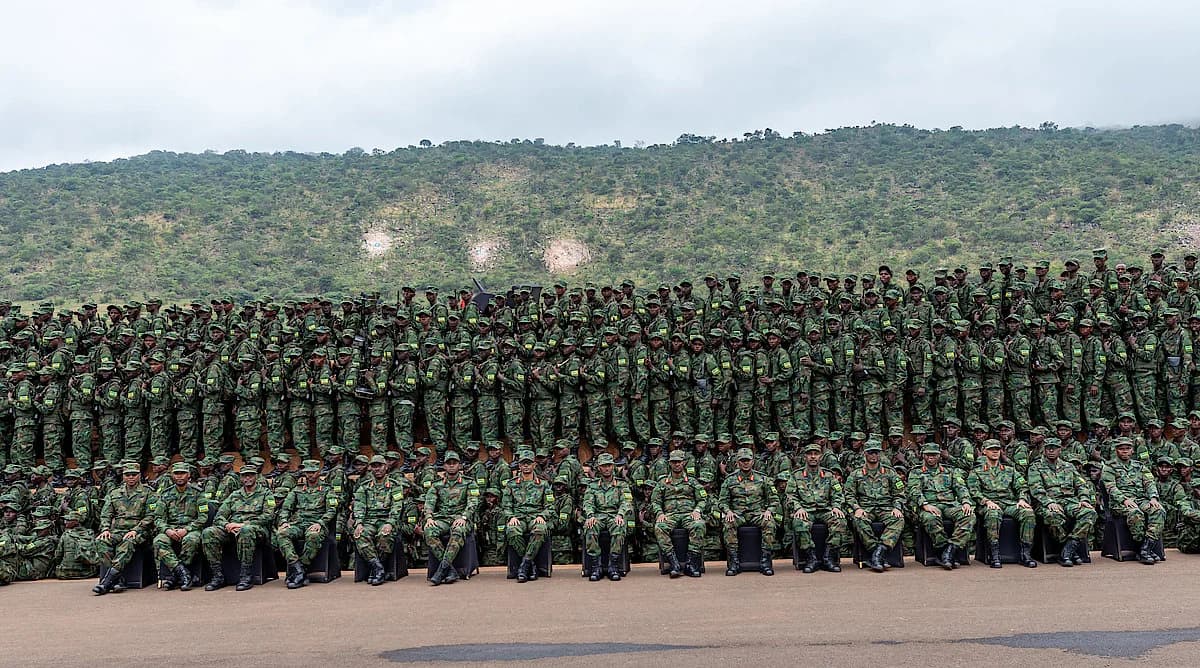
A sharp diplomatic confrontation erupted between Washington and Kigali on Monday after the United States imposed sweeping sanctions on Rwanda's national military and four of its most senior commanders, prompting an immediate and defiant rebuttal from the Rwandan government, which condemned the measures as unjust, misleading, and dangerously one-sided. The U.S. Department of the Treasury's Office of Foreign Assets Control (OFAC) designated the Rwanda Defence Force (RDF), Rwanda's national military, and four of its top officers, citing what it described as direct operational support for the Marc
A sharp diplomatic confrontation erupted between Washington and Kigali on Monday after the United States imposed sweeping sanctions on Rwanda's national military and four of its most senior commanders, prompting an immediate and defiant rebuttal from the Rwandan government, which condemned the measures as unjust, misleading, and dangerously one-sided.
The U.S. Department of the Treasury's Office of Foreign Assets Control (OFAC) designated the Rwanda Defence Force (RDF), Rwanda's national military, and four of its top officers, citing what it described as direct operational support for the March 23 Movement (M23), a rebel group already sanctioned by both the United States and the United Nations for horrific human rights abuses in eastern Democratic Republic of the Congo (DRC).
Kinshasa welcomed the sanctions, describing them as "a strong signal in support of respect" for its territorial integrity and sovereignty. Rwanda's response was starkly different. Within hours of Washington's announcement, the Office of the Government Spokesperson issued a formal statement titled "Rwanda Regrets One-Sided Sanctions," accusing the United States of misrepresenting the reality on the ground and ignoring systematic violations by the Congolese government itself.
The timing of the sanctions carries enormous diplomatic weight. President Donald Trump in December 2025 brought together the leaders of Rwanda and the DRC to sign a peace deal, predicting a "great miracle." Within days of the Washington Accords being signed, M23 forces captured the strategic border city of Uvira, dealing an early blow to the fragile peace deal.
Uvira, a strategically critical city along the DRC-Burundi border, fell to M23 forces despite the peace agreement having just been signed under American auspices in Washington. The offensive resulted in civilian deaths and displaced thousands. M23 later pulled out of Uvira under U.S. pressure, though the Treasury Department noted that the rebels' continued presence near Burundi's border "carries the risk of escalating the conflict into a broader regional war." U.S. Department of the Treasury
Treasury Secretary Scott Bessent was unequivocal, stating that "President Trump is the Peace President, and Treasury will use all tools at its disposal to ensure that the parties to the Washington Accords uphold their obligations," and demanding the immediate withdrawal of all RDF troops, weapons, and equipment from Congolese territory.
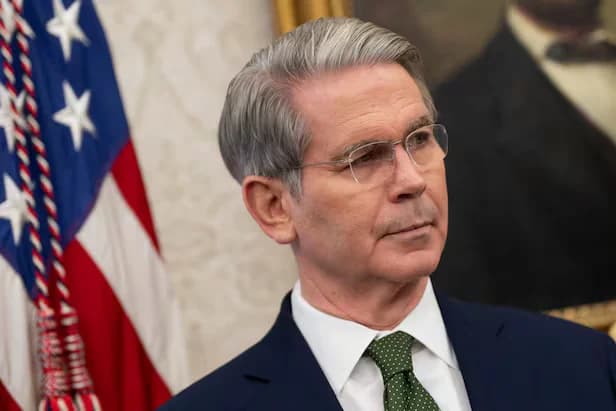
Scott Kenneth Homer Bessent, the79th United States secretary of the treasury
According to U.S. authorities, Rwanda's military involvement in eastern DRC is extensive, deliberate, and ongoing. The RDF has introduced advanced military equipment to the battlefield in eastern DRC, including GPS jamming systems, air defence equipment, drones, and additional materiel. Thousands of RDF troops are deployed across eastern DRC, where they actively engage in combat operations and facilitate M23's control of territory. The RDF also provides training to M23 fighters at RDF military centres and supports its recruitment efforts, including the recruitment of refugees.
Washington further alleges a financial dimension to Rwanda's involvement. In exchange for its support for M23, Rwanda has gained access to mineral-rich areas of eastern DRC that contribute to the financing of M23's armed rebellion.
According to U.S., DRC and U.N. experts, M23 has expanded significantly since late 2021, with its forces now estimated at between 6,500 and 8,000 fighters. The group has seized vast swathes of territory in eastern Congo, including the provincial capitals of Goma and Bukavu, a trajectory Washington argues would not have been possible without sustained backing from the Rwanda Defence Force.
The Treasury Department named and individually sanctioned four senior RDF officers alongside the institution itself:
Vincent Nyakarundi
Army Chief of Staff of the RDF, described as a senior commander of Rwanda's land forces which conducted military operations in support of M23.
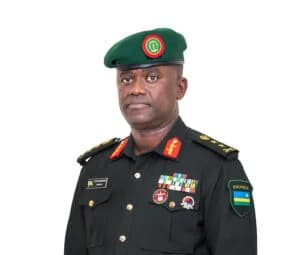
Maj. Gen. Vincent NYAKARUNDI, the current Army Chief of Staff (ACOS) of Rwanda Defence Force
Ruki Karusisi
A major general and commander of the RDF's 5th Infantry Division, who previously served as Special Operations Force Commander and oversaw military operations in support of M23.
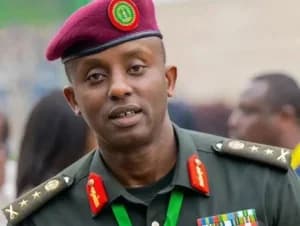
Maj. Gen. Ruki Karusisi, the Commander of the RDF's 5th Infantry Division
Mubarakh Mugang
a Chief of Defence Staff of the RDF. Before his current appointment in June 2023, he served as Army Chief of Staff and played a key role in planning and commanding RDF forces in eastern DRC.
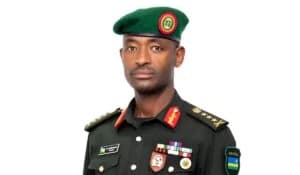
Gen. Mubarakh MUGANGA. RDF's Chief of Defence Staff
Stanislas Gashugi
Appointed as the RDF's Special Operations Force Commander on March 15, 2025, replacing
Karusis
i in that role.
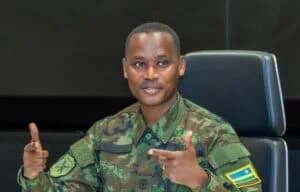
Gen. Stanislas Gashugi, RDF Special Operations Force Commande
All four were designated under Executive Order 13413 for being leaders of an entity whose members have been responsible for actions that threaten the peace, security, and stability of the DRC.
State Department spokesman Tommy Pigott said the "continued backing from the RDF and its senior leadership has enabled M23 to capture DRC sovereign territory and continue these grave abuses." All U.S.-based assets belonging to these individuals and the RDF are now frozen, and American persons and businesses are prohibited from any financial dealings with them.
Kigali rejected every element of Washington's framing. Rwandan government spokesperson Yolande Makolo stated that the sanctions "unjustly targeting only one party to the peace process misrepresent the reality and distort the facts of the conflict."
Rwanda turned the accusation back on Kinshasa, stating that "consistent and indiscriminate drone attacks and ground offensives constitute clear violations of ceasefire agreements by the DRC, and continue to cost many lives," and described its military's conduct as a matter of national pride, asserting that "protecting our country is a badge of honour which the Rwanda Defence Force carries very proudly."
Kigali also identified what it considers the true source of instability: a DRC coalition that includes, in Rwanda's framing, foreign mercenaries, state-sponsored ethnic militias known as Wazalendo, and the FDLR, a genocidal militia composed in part of remnants linked to those who perpetrated the 1994 genocide against the Tutsi in Rwanda. Rwanda has long insisted it is only involved in eastern DRC to help protect against this militia, denying direct military involvement despite considerable evidence from United Nations observers and others.
Rwanda accused the DRC of having committed under the Washington Accords to an "irreversible and verifiable" end to state support for the FDLR, a commitment Kigali says has not been honoured. "Rwanda is fully committed to disengagement of its forces in tandem with the DRC implementing their obligations," the statement said.
Crucially, Rwanda stopped short of rejecting the Washington Accords entirely, instead welcoming the resumption of the Joint Oversight Committee and calling for "an even-handed approach from all partners", a direct demand that Washington apply equal pressure to Kinshasa.
The conflict forms the backdrop to one of the world's most severe ongoing humanitarian emergencies. The conflict has created one of the world's most significant humanitarian crises, with more than eight million people displaced, according to the UN agency for refugees. The mineral-rich east of the DRC, home to vast deposits of coltan, gold, and cassiterite essential to global technology supply chains, has seen decades of armed conflict, with M23 now holding more territory than at any point in its history.
The sanctions mark a remarkable rupture in a historically close partnership. Trump had earlier sounded positive about working with Rwandan President Paul Kagame, a veteran leader who has been willing to take in migrants deported from the United States, a top political priority for the Trump administration. The December peace deal had also been hailed by Trump as a way to secure critical minerals from the DRC.
The United States has signalled that Monday's designations are not necessarily permanent. Treasury emphasised that sanctions are ultimately intended to bring about a change in behaviour, and that removal from the sanctions list remains possible should Rwanda demonstrate full compliance with the Washington Accords.
For now, diplomatic tensions between Washington and Kigali appear set to deepen, with U.S. officials signalling that further progress will depend on Rwanda’s compliance with the Washington Accords.
Rwanda has formally denied supporting M23. The DRC government welcomed the sanctions at the time of publication. This story will be updated as developments emerge.
Sources: U.S. Department of the Treasury OFAC; U.S. Department of State; Government of Rwanda Office of the Government Spokesperson; Al Jazeera; Reuters; AFP; SABC News.



Comments
No comments yet. Be the first to share a thought.