
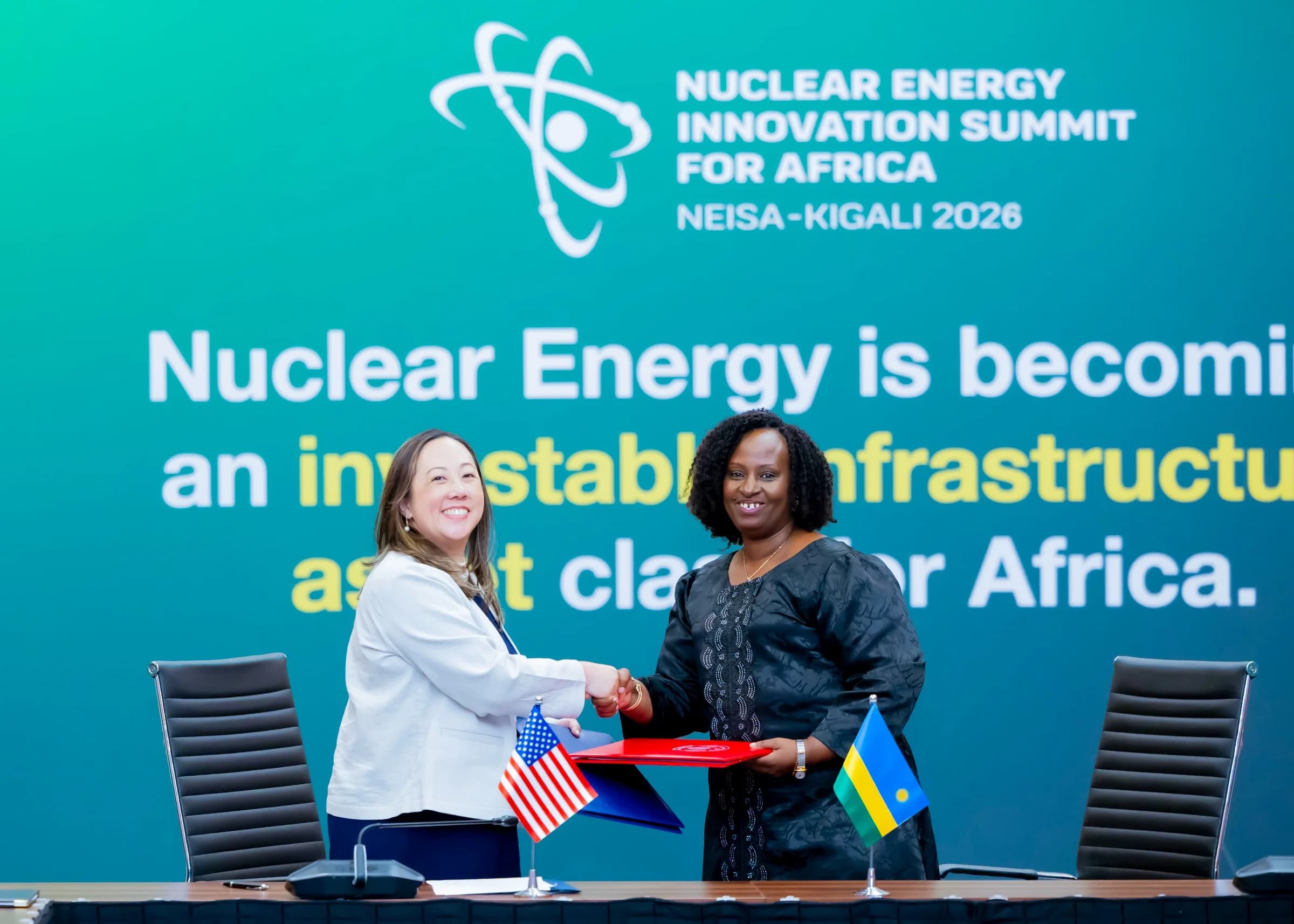
Rwanda and the United States have signed a Memorandum of Understanding (MoU) on Strategic Civil Nuclear Cooperation, aimed at advancing peaceful nuclear energy development and deepening long-term energy security ties between the two countries. The agreement was signed in Kigali on Tuesday on the sidelines of the second Nuclear Energy Innovation Summit for Africa (NEISA). It was formalised between Rwanda's Minister of State for Foreign Affairs and International Cooperation, Dr. Usta Kayitesi, and Acting Principal Deputy Assistant Secretary in the U.S. Department of State Bureau of Arms Control
Rwanda and the United States have signed a Memorandum of Understanding (MoU) on Strategic Civil Nuclear Cooperation, aimed at advancing peaceful nuclear energy development and deepening long-term energy security ties between the two countries.
The agreement was signed in Kigali on Tuesday on the sidelines of the second Nuclear Energy Innovation Summit for Africa (NEISA).
It was formalised between Rwanda's Minister of State for Foreign Affairs and International Cooperation, Dr. Usta Kayitesi, and Acting Principal Deputy Assistant Secretary in the U.S. Department of State Bureau of Arms Control and Nonproliferation, Renee Sonderman.
The MoU expands cooperation in civil nuclear energy, including support for the development of reliable and secure energy systems, while reinforcing both countries' commitments to nuclear safety, security, and nonproliferation standards. It also opens avenues for technical and strategic collaboration on the peaceful use of nuclear technology.
The signing comes as Rwanda moves to diversify its energy mix and strengthen electricity supply to support industrial growth. Nuclear energy has emerged as a central plank of that long-term strategy.
On the same occasion, U.S. firm Holtec International and the Rwanda Atomic Energy Board (RAEB) signed a separate comprehensive Development Agreement covering the potential deployment of Holtec's SMR-300 small modular reactor in Rwanda.
NCMOUs are diplomatic instruments designed to establish the basis for broader, strategic civil nuclear relationships, strengthen ties between experts and industries on both sides, and provide high-level political backing for nonproliferation goals. The instrument does not authorise the export of nuclear materials or equipment.



Comments
No comments yet. Be the first to share a thought.