
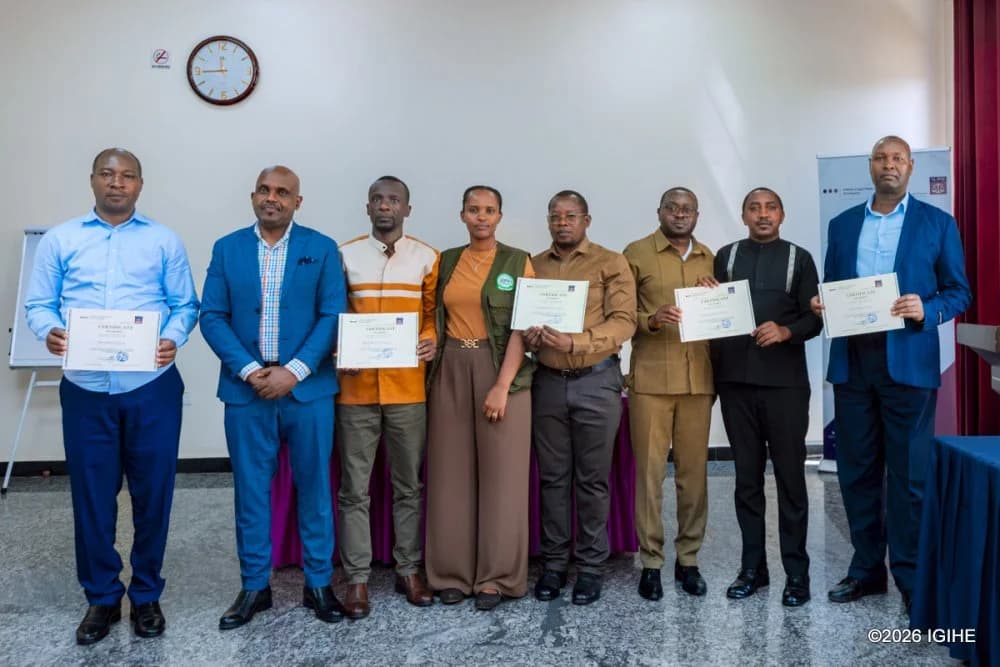
Rwandan judges have completed a new round of specialized training aimed at strengthening the implementation of restorative justice and plea bargaining, two judicial reforms that are helping improve access to justice while reducing court case backlogs. The training, organized by the Institute of Legal Practice and Development (ILPD) , brought together judges from across the country to enhance their understanding of the two policies and promote consistent application within Rwanda's judicial system. Speaking at the closing ceremony, the spokesperson for Rwanda's Judiciary, Harrison Mutabazi , sa
Rwandan judges have completed a new round of specialized training aimed at strengthening the implementation of restorative justice and plea bargaining, two judicial reforms that are helping improve access to justice while reducing court case backlogs.
The training, organized by the Institute of Legal Practice and Development (ILPD), brought together judges from across the country to enhance their understanding of the two policies and promote consistent application within Rwanda's judicial system.
Speaking at the closing ceremony, the spokesperson for Rwanda's Judiciary, Harrison Mutabazi, said the restorative justice policy, introduced in courts about ten months ago, has already produced encouraging results. He noted that by the end of the current judicial year, approximately 4,000 cases are expected to have been resolved through restorative justice mechanisms.
Mutabazi also highlighted the success of Rwanda's plea bargaining policy, which has been in operation for more than four years. Under the system, prosecutors and defendants can reach agreements based on the admission of guilt, helping to speed up court proceedings. According to him, more than 36,000 cases have already been concluded through this approach.
Despite the progress, Mutabazi emphasized that the Judiciary is still working toward full implementation of both reforms. He explained that continuous training is essential to ensure judges and other justice sector professionals apply the policies consistently and effectively.
"These trainings come at the right time. We are implementing these policies, but the journey is not yet complete. The participants are expected to become champions of these reforms and help ensure their successful implementation across all courts," he said.
He added that the Judiciary closely monitors the implementation of the policies through daily, weekly, and monthly reports from courts nationwide, allowing officials to track progress and address any shortcomings without delay.
One of the participants, Judge Meshack Rurangwa of the Ngoma Intermediate Court, said the training helped establish a common understanding of how restorative justice and plea bargaining should be applied.
"We have gained a shared approach to handling cases brought before the courts. This will help strengthen peace within Rwandan communities while ensuring justice is delivered fairly and consistently," he said.
Rurangwa also noted that the training addressed previous inconsistencies, including instances where prosecutors approved plea agreements without conducting adequate reviews. He stressed that such procedures must now be handled more carefully and uniformly.
The latest session marks the
fifth phase
of ILPD's nationwide training program, which has also benefited lawyers, prosecutors, investigators, and other legal professionals. Upon completion of the current phase, more than
500 justice sector practitioners
will have received training on the two judicial reforms, reinforcing Rwanda's ongoing efforts to build a more efficient, accessible, and restorative justice system.



Comments
No comments yet. Be the first to share a thought.