
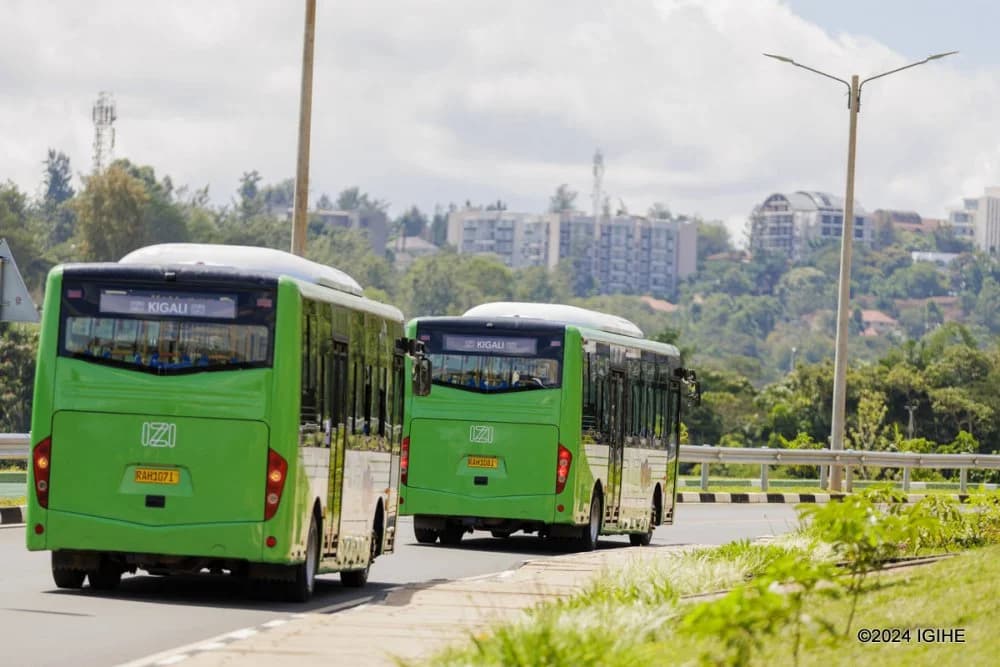
The World Bank’s Board of Executive Directors has approved $100 million in International Development Association (IDA) financing for the Rwanda Urban Mobility Improvement (RUMI) Project, which aims to bring greener and safer mobility solutions to support Kigali’s transition toward an inclusive, accessible, and climate-resilient transport system. According to the press statement, the project will address critical challenges affecting mobility in Kigali, including inadequate public transport services, limited pedestrian and cycling infrastructure, traffic congestion, and road safety concerns.
The World Bank’s Board of Executive Directors has approved $100 million in International Development Association (IDA) financing for the Rwanda Urban Mobility Improvement (RUMI) Project, which aims to bring greener and safer mobility solutions to support Kigali’s transition toward an inclusive, accessible, and climate-resilient transport system. According to the press statement, the project will address critical challenges affecting mobility in Kigali, including inadequate public transport services, limited pedestrian and cycling infrastructure, traffic congestion, and road safety concerns. Flagship interventions include the development of the Nyabugogo multimodal transit hub, the introduction of dedicated bus lanes, the expansion of sidewalks and cycling paths for last-mile connectivity, and the deployment of electric buses and charging infrastructure. “The project will unlock access to jobs and services, particularly for women and youth, and support Kigali’s ambition to become a public transport–oriented and climate-smart city,” said Sahr Kpundeh, World Bank Country Manager for Rwanda. He added, “It is also about making everyday journeys reliable, safer, and more inclusive.” Only about one-third of jobs in Kigali are reachable within an hour by public transport. The project will help change that by improving connectivity across key corridors and making it easier for people to get to work, schools, and essential services. The new Nyabugogo hub alone is expected to serve up to 180,000 passengers per day by 2030, becoming a vibrant center for regional and local transit, commerce, and job creation. “The Rwanda Urban Mobility Improvement Project lays the foundation for a modern, efficient, and environmentally friendly urban transport system,” added Akiko Kishiue, World Bank Senior Urban Transport Specialist for Rwanda. “By investing in infrastructure, institutions, and innovation, we aim to improve urban mobility while creating thousands of direct and indirect jobs.” According to the World Bank, the project prioritizes gender equity, tackling the underrepresentation of women (4.2%) in Rwanda’s transport sector. It will create opportunities for women in transport planning, construction, and operations, including entrepreneurship at the Nyabugogo multimodal transit hub. It also aims to boost climate resilience, with flood-mitigation measures at Nyabugogo, a flood-prone transit hub, ensuring reliable transport even during heavy rains. The planned transition to electric buses will also contribute to reducing urban air pollution and lowering greenhouse gas emissions from the growing transport sector.



Comments
No comments yet. Be the first to share a thought.