
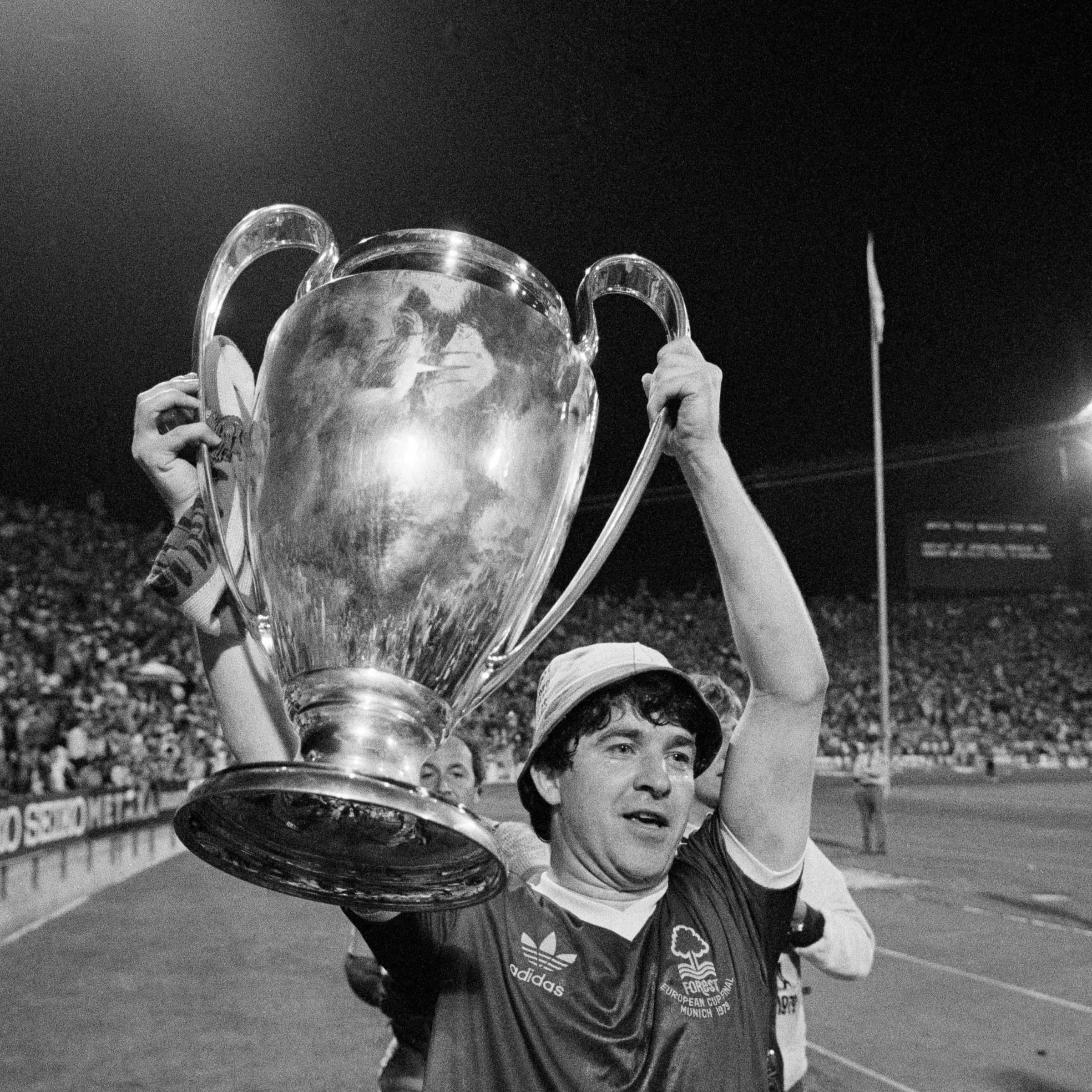
European football has been plunged into mourning following the death of John Robertson, the former Scotland international and Nottingham Forest winger whose name is etched permanently into the history of the European Cup. Robertson was a central figure in Nottingham Forest’s extraordinary rise under legendary manager Brian Clough, playing a decisive role in the club’s back-to-back European Cup triumphs at the end of the 1970s. According to UEFA, Robertson delivered one of the most iconic moments in European football when he scored the only goal in the 1980 European Cup final, securing a 1–0 vi
European football has been plunged into mourning following the death of John Robertson, the former Scotland international and Nottingham Forest winger whose name is etched permanently into the history of the European Cup. Robertson was a central figure in Nottingham Forest’s extraordinary rise under legendary manager Brian Clough, playing a decisive role in the club’s back-to-back European Cup triumphs at the end of the 1970s. According to UEFA, Robertson delivered one of the most iconic moments in European football when he scored the only goal in the 1980 European Cup final, securing a 1–0 victory over Hamburger SV in Madrid. A year earlier, in the 1979 final, he had provided the assist for Trevor Francis’ winning header, again proving decisive on the biggest stage. Born in Viewpark, Lanarkshire, Scotland, Robertson spent the majority of his career at Nottingham Forest, where he made over 500 appearances and won major honours, including the English First Division title, two League Cups, and two European Cups, according to Nottingham Forest Football Club. Despite not fitting the traditional image of a winger, Robertson’s intelligence, close control and ability to deliver in crucial moments made him irreplaceable in Brian Clough’s system. Former teammates and managers frequently described him as a “big-game player” whose calmness under pressure separated him from others. On the international stage, Robertson represented Scotland at the 1978 and 1982 FIFA World Cups, earning multiple caps and becoming part of a generation that left a lasting mark on Scottish football. According to the Scottish FA, he was admired not only for his talent but also for his professionalism and humility. After retiring from playing, Robertson remained involved in the game, working in coaching and scouting roles alongside Martin O’Neill at several clubs, including Celtic, Leicester City and Aston Villa, continuing to influence football away from the spotlight. Tributes have poured in from across Europe, with Nottingham Forest describing him as “one of the greatest players ever to wear the red shirt”, while UEFA hailed his legacy as “a defining chapter in European Cup history.” John Robertson leaves behind a legacy built on excellence, loyalty and moments that shaped European football forever. For Nottingham Forest supporters and football historians alike, his name will always be synonymous with one of the greatest underdog stories the sport has ever known.


Comments
No comments yet. Be the first to share a thought.