
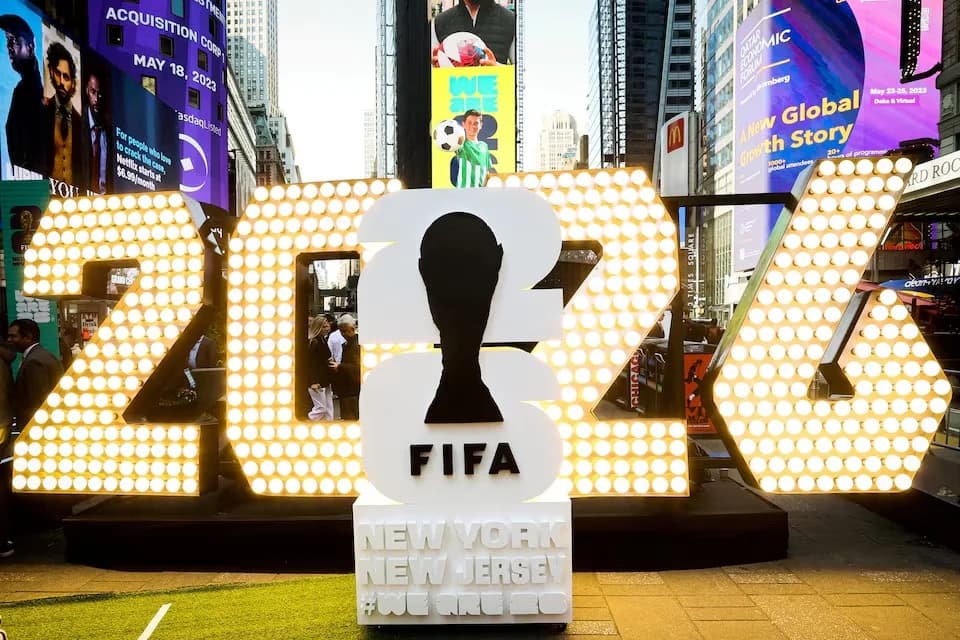
With just weeks to go before kickoff, uncertainty is clouding what should be one of football’s biggest global celebrations. Millions of fans in India and China could be unable to watch the 2026 FIFA World Cup due to unresolved broadcast rights negotiations and delayed decisions. A Rare Standoff Before Kickoff The FIFA World Cup 2026 is set to begin on June 11 across North America, yet no official broadcast agreements have been finalized in two of the world’s most populous nations. This unusual delay has raised concerns across the global football community. In India, negotiations between FIF
With just weeks to go before kickoff, uncertainty is clouding what should be one of football’s biggest global celebrations. Millions of fans in India and China could be unable to watch the 2026 FIFA World Cup due to unresolved broadcast rights negotiations and delayed decisions. A Rare Standoff Before Kickoff The FIFA World Cup 2026 is set to begin on June 11 across North America, yet no official broadcast agreements have been finalized in two of the world’s most populous nations. This unusual delay has raised concerns across the global football community. In India, negotiations between FIFA and a joint venture between Reliance Industries and The Walt Disney Company have hit a wall. The joint venture reportedly offered $20 million for broadcasting rights—a figure significantly below FIFA’s earlier expectations, which were close to $100 million for both the 2026 and 2030 tournaments. Sources indicate that FIFA has shown little interest in accepting the reduced offer, despite lowering its initial valuation. Meanwhile, Sony Group, another potential bidder, has opted out, citing limited commercial value. China Still Silent The situation is equally uncertain in China, where no official broadcaster has been confirmed. This is particularly surprising given the country’s massive football audience and its strong engagement during previous tournaments. During the 2022 World Cup, China accounted for nearly half of global digital and social media viewing hours. Traditionally, state broadcaster China Central Television (CCTV) would have secured rights well in advance, promoting the event weeks before kickoff. This time, however, no deal has been announced. Timing and Market Challenges The delay leaves less than five weeks to finalize agreements, set up broadcasting infrastructure, and secure advertisers—an increasingly tight timeline. In India, market dynamics appear to be shaping the negotiations. While football has a large following, it still lags behind cricket in commercial value. Additionally, the tournament’s scheduling—taking place in the United States, Canada, and Mexico—means most matches will air late at night for Indian audiences, potentially reducing viewership. Industry insiders also point to broader economic pressures, including reduced advertising spending, which further complicates the willingness of broadcasters to invest heavily. Massive Audience at Stake The stakes are enormous. Combined, India and China represent hundreds of millions of football fans. In 2022, India alone recorded over 110 million digital viewers, while China contributed significantly to global engagement. Failure to secure broadcast deals in these markets could result in one of the largest viewership gaps in World Cup history—an outcome that would impact not just fans, but also sponsors, advertisers, and FIFA’s global reach. Final Countdown Despite the deadlock, some experts believe a last-minute breakthrough remains possible. As one industry executive put it, negotiations are “like a chess game with a few moves left.” But with the clock ticking toward kickoff, the pressure is mounting. If no agreements are reached soon, millions of passionate fans could find themselves watching from the sidelines—cut off from football’s biggest stage.

Comments
No comments yet. Be the first to share a thought.